
For travellers dreaming of African wildlife, wide-open landscapes and warm Indian Ocean beaches, Kenya Safari Tours from Germany offer an excellent combination of adventure, nature and relaxation. Kenya is one of East Africa’s classic safari destinations, with famous wildlife areas such as the Masai Mara, Amboseli, Lake Nakuru, Samburu, Tsavo and Ol Pejeta, together with beach destinations including Diani, Watamu and the wider Kenyan coast.
A safari from Germany can be designed in many different ways. First-time visitors may prefer a seven- or ten-day route covering Kenya’s best-known parks. Couples can combine a private wildlife safari with several nights at the beach. Families may choose a slower itinerary with shorter drives and family-friendly lodges, while photographers may spend more nights in only one or two wildlife areas to maximise time in the field.
From a practical safari-planning perspective, the quality of a trip depends less on how many destinations appear on the itinerary and more on how intelligently those destinations are connected. Driving distances, lodge locations, game-drive times, international flight schedules, vehicle type and the number of nights spent in each park all influence the final experience.
This guide is designed specifically for travellers researching Kenya Safari Tours from Germany. It combines practical safari planning with current official travel information, while also explaining which parks work well together, how long to stay, when to travel and what German visitors should verify before departure.
Why Choose Kenya for a Safari from Germany?
Kenya gives travellers a remarkable amount of variety within one country.
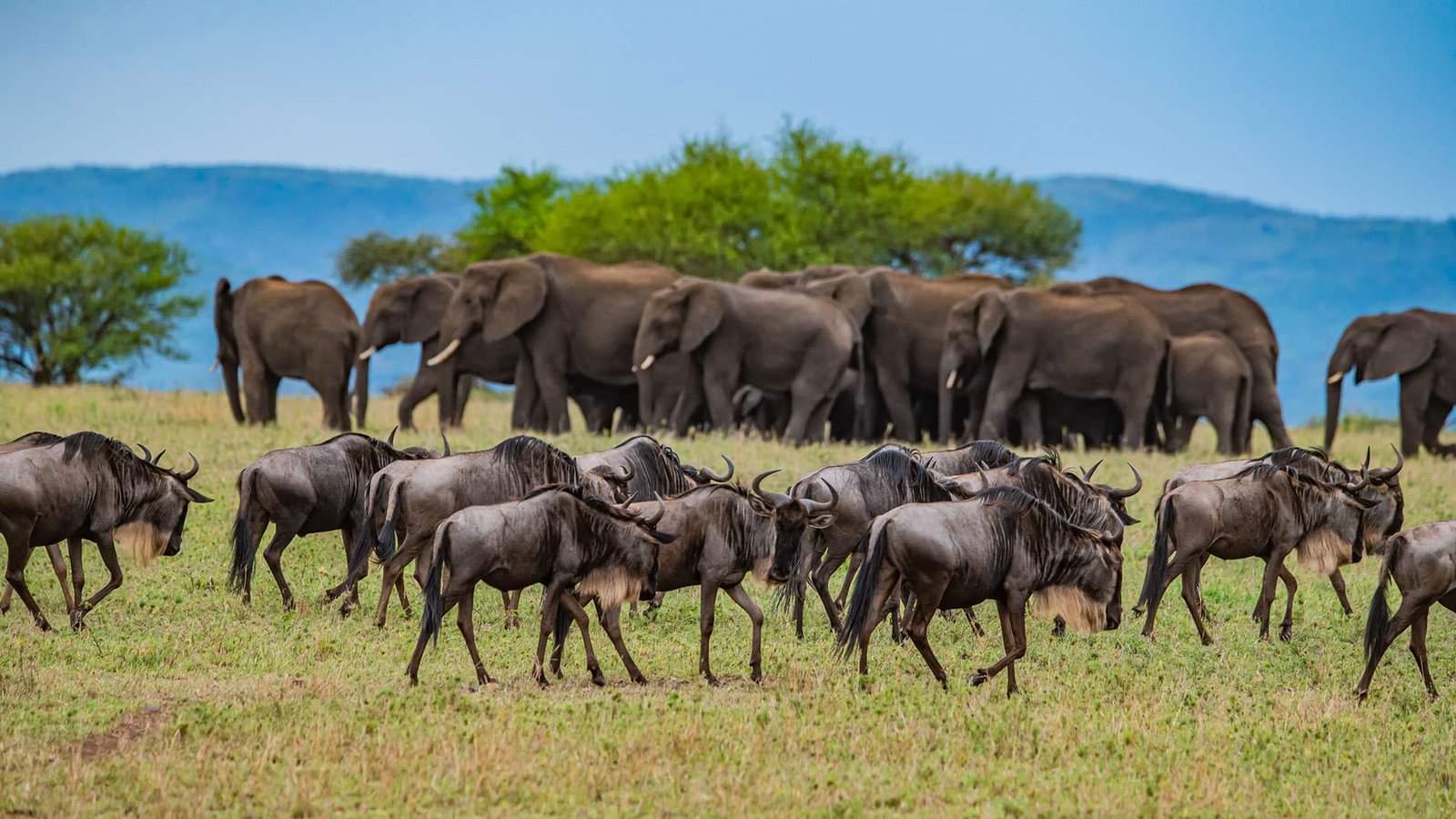
You can watch elephants crossing the plains of Amboseli, search for big cats in the Masai Mara, look for rhinos in central Kenya, explore the dry landscapes of Samburu and finish the journey beside the Indian Ocean.
That variety makes Kenya particularly suitable for travellers coming from Germany who want more than a simple wildlife holiday.
For first-time visitors, Kenya offers the kind of scenes many people imagine when they think about an African safari: open grasslands, giraffes walking across the horizon, elephants gathering near water and lions resting beneath acacia trees.
Kenya Wildlife Service lists well-known safari destinations including Amboseli, Lake Nakuru, Tsavo East, Tsavo West and Nairobi National Park among the country’s wildlife areas.
The country also allows travellers to combine different travel styles easily. A trip can begin with a comfortable Nairobi hotel, continue through several safari lodges and end at a beach resort.
That flexibility is one of the strongest reasons to choose Kenya.
Is Kenya Good for a First African Safari?
Yes.
Kenya is an excellent choice for first-time safari travellers because its major parks offer noticeably different landscapes and wildlife experiences.
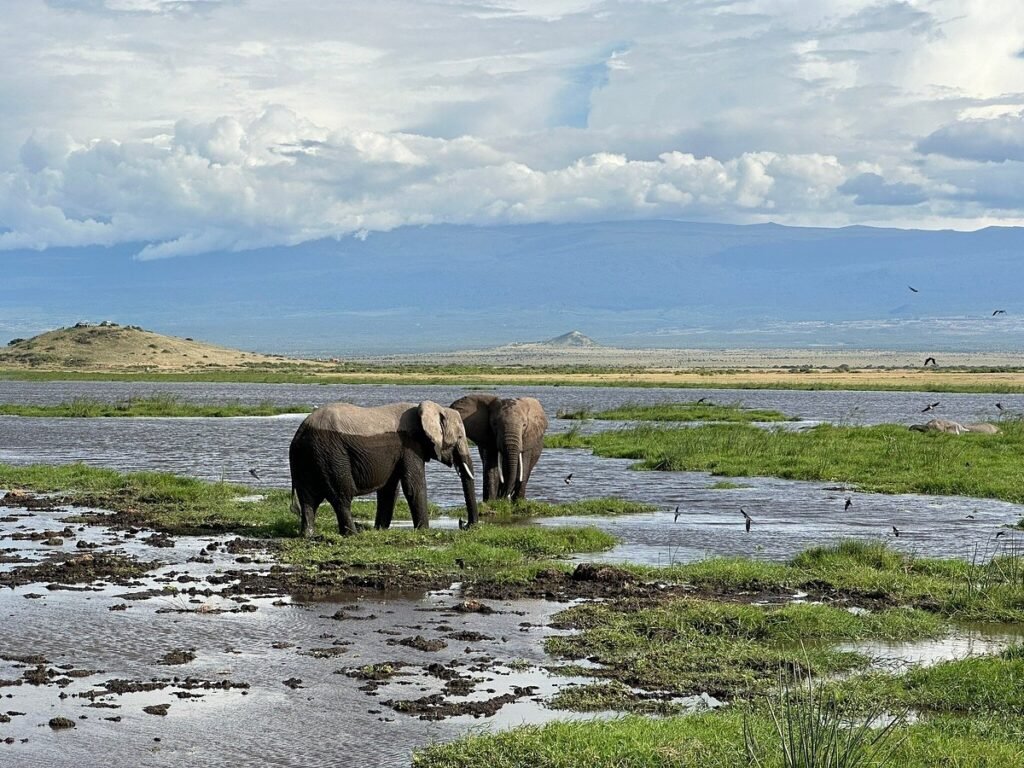
Amboseli is strongly associated with elephants and views toward Mount Kilimanjaro. Kenya Wildlife Service describes the park as one of Africa’s premier destinations for close encounters with large elephant herds and notes that its ecosystem includes open plains, woodland, bushland, swamps and marshes.
The Masai Mara offers the classic open savannah experience and is particularly attractive to travellers interested in predators and the seasonal movements associated with the wider Mara-Serengeti ecosystem.
Lake Nakuru provides a different environment again, while Samburu introduces visitors to the dry landscapes of northern Kenya.
Because each destination feels different, even a one-week safari can provide substantial variety.
Flying From Germany to Kenya
Most Kenya Safari Tours from Germany begin in Nairobi.
Jomo Kenyatta International Airport is Kenya’s main international gateway and provides the most practical starting point for safari routes heading toward Amboseli, Lake Naivasha, Lake Nakuru, the Masai Mara, Ol Pejeta and Samburu.
Travellers may depart from cities such as Frankfurt, Munich, Berlin, Düsseldorf, Hamburg or other German airports, depending on airline schedules and connections.
Flight schedules change regularly, so they should always be checked when the safari is being planned.
One practical point is especially important: look at the arrival time, not only the airfare.
A traveller arriving in Nairobi late at night should normally spend the first night in the city or near the airport rather than beginning a long road transfer immediately.
A well-planned safari should work with your international flight schedule.
It should not force exhausted travellers into five hours of driving because the itinerary was copied from a standard template.
Entry Requirements for German Citizens Travelling to Kenya
German citizens should check current entry requirements before travelling.
As of 2026, Kenya uses an Electronic Travel Authorisation system. The German Federal Foreign Office states that entry into Kenya requires an electronic travel authorisation, subject to applicable exemptions and current rules.
Kenya’s official eTA platform provides applications, status checking, eligibility information and guidance for travellers.
The official platform states that eTA applications are usually processed in around three days and recommends applying at least two weeks before travel to allow enough time for processing.
Because immigration requirements can change, German travellers should verify their status shortly before departure using both the official Kenya eTA platform and the German Federal Foreign Office rather than relying on old travel blogs or forum posts.
Children and Kenya eTA Requirements
Families travelling from Germany should pay particular attention to documentation for children.
Kenya’s official eTA guidance states that visitors, including infants and children, require the appropriate approved travel authorisation unless they fall within an exemption.
Parents should therefore prepare travel documentation for every family member rather than assuming children are automatically included in an adult application.
A safari operator can usually provide accommodation details and itinerary information needed during trip preparation, but travellers remain responsible for checking that passport and entry information is correct.
How Long Should a Kenya Safari from Germany Be?
For most travellers flying from Germany, seven to ten safari days offers an excellent balance.
A five-day safari is possible, especially when focusing on destinations such as Amboseli, Lake Naivasha and the Masai Mara.
Seven days allows the itinerary to slow down slightly.
Ten days makes it possible to add another wildlife region such as Samburu or Ol Pejeta.
Travellers who want a safari and beach holiday should consider approximately twelve to fourteen days.
Because international travel already takes considerable time, extremely short safaris may not provide the best value unless Kenya forms part of a wider African journey.
A Good 7-Day Kenya Safari from Germany
A balanced seven-day first safari could combine Nairobi, Amboseli, Lake Naivasha and the Masai Mara.
The journey might begin with an overnight stay in Nairobi after arrival from Germany.
The following morning, travel to Amboseli for two nights.
This gives travellers a proper opportunity to enjoy morning and afternoon game drives rather than arriving for only a few hours.
From Amboseli, continue toward the Rift Valley and spend a night around Lake Naivasha.
The final part of the safari can then include two or three nights in the Masai Mara.
This route offers varied landscapes without trying to cover half of Kenya within one week.
A Good 10-Day Kenya Safari from Germany
Travellers with ten days have more flexibility.
One excellent route combines Nairobi, Samburu, Ol Pejeta, Lake Nakuru and the Masai Mara.
This works well because northern Kenya creates an immediate contrast with the greener landscapes farther south.
Another option combines Amboseli, Lake Naivasha, Lake Nakuru and Masai Mara, with more nights allocated to each destination.
The second approach is especially suitable for first-time visitors who prefer a slower safari.
A longer safari does not automatically mean adding more parks.
Often the best use of extra days is simply staying longer in the most rewarding areas.
A 14-Day Kenya Safari and Beach Holiday
For many German couples and families, two weeks is ideal.
The first eight or nine days can be spent on safari, followed by four or five nights along the coast.
One possible route is Nairobi, Amboseli, Lake Naivasha and the Masai Mara, followed by a flight toward Diani.
Another combines Tsavo with the coast, reducing the need to return to Nairobi before beach time.
This type of journey works particularly well because the two halves of the holiday feel completely different.
Safari days often begin early and involve long periods outdoors.
Beach days allow travellers to slow down, sleep later, swim and relax.
Masai Mara: The Classic Kenya Safari Experience
For many travellers from Germany, the Masai Mara is the destination they most want to experience.
That makes sense.
Its wide grasslands, abundant wildlife and strong predator populations create the kind of safari scenes that first-time visitors often dream about.
Two nights should normally be considered the minimum.
Three nights is better.
More time gives travellers several game drives and reduces the pressure to find every major species immediately.
This is especially important because wildlife is unpredictable.
You may encounter lions within fifteen minutes of entering the reserve, or you may spend several hours before an important sighting appears.
That unpredictability is part of a genuine safari.
The Great Migration and the Masai Mara
The Great Migration is one of the biggest reasons travellers choose East Africa.
Large numbers of wildebeest and zebras move through the wider Serengeti-Mara ecosystem in response to rainfall and grazing conditions.
German travellers planning Kenya Safari Tours from Germany specifically around migration viewing should understand that nature does not follow fixed dates.
River crossings cannot be guaranteed.
A responsible safari operator should never promise that travellers will witness a crossing on a particular day.
A better approach is to stay several nights in a well-positioned area during the broader migration season and maximise time on safari.
That improves the opportunity for meaningful sightings without creating unrealistic expectations.
Amboseli National Park
Amboseli is one of Kenya’s most rewarding parks for elephant lovers.
Kenya Wildlife Service highlights its large elephant herds and diverse habitats, which include grasslands, woodland, swamps and marshes.
Mount Kilimanjaro creates the famous backdrop.
Although the mountain lies across the border in Tanzania, many of the most recognised Kilimanjaro safari photographs are taken from the Kenyan side around Amboseli.
Weather matters.
Cloud can hide the mountain completely.
For that reason, staying two nights provides a much better opportunity than rushing through on a single afternoon.
Early mornings are often particularly beautiful.
Lake Nakuru National Park
Lake Nakuru fits naturally into many Kenya safari routes.
It provides a useful change from open savannah and can be particularly interesting for travellers hoping to see rhinos.
The surrounding landscapes, woodland and lake environment make the park visually different from Amboseli and the Masai Mara.
For many itineraries, one night is enough.
A traveller arriving around lunchtime can enjoy an afternoon game drive followed by another drive the following morning before continuing toward the next destination.
Photographers and birdwatchers may prefer more time.
Lake Naivasha
Lake Naivasha is useful because it changes the pace of a safari.
Instead of spending every activity inside a vehicle, travellers may include a boat experience and other nearby excursions depending on their programme.
The lake is particularly popular for birdlife and hippo viewing.
Nearby attractions can add walking or cycling opportunities.
This makes Naivasha especially suitable for families.
A safari should not always mean sitting inside a Land Cruiser from sunrise until sunset.
Breaking the journey with a different activity often makes the whole trip more enjoyable.
Samburu National Reserve
Samburu is an excellent destination for travellers who want something different from the classic southern Kenya safari.
The landscape is dry, rugged and dramatic.
Wildlife depends heavily on the Ewaso Ng’iro River and surrounding habitats.
Samburu is also associated with several northern species that travellers are less likely to see in the Masai Mara.
For returning safari travellers from Germany, this makes Samburu especially interesting.
It also combines naturally with Ol Pejeta.
Two nights provides a good introduction, while three gives visitors a more relaxed experience.
Ol Pejeta Conservancy
Ol Pejeta is particularly valuable for travellers interested in conservation.
The conservancy is strongly associated with rhino protection and conservation programmes.
For families, it can add an educational side to a wildlife holiday.
A child may remember seeing a lion, but understanding why rhinos need protection can create a deeper impression.
Ol Pejeta also works well geographically between Nairobi, Samburu and the central Kenyan highlands.
It can therefore be included without creating an unreasonable detour.
Tsavo East National Park
Tsavo East offers a sense of wilderness and scale.
The landscapes are expansive, and elephants are one of the major attractions.
The reddish soil of the area can coat elephants in distinctive warm colours, creating classic Tsavo photography.
Tsavo East works particularly well for travellers moving between Nairobi and the coast.
It is also an excellent alternative for German travellers who have already visited the Masai Mara and want to explore another part of Kenya.
Tsavo West National Park
Tsavo West provides a different landscape from Tsavo East.
Kenya Wildlife Service describes the park as a combination of springs, ancient lava flows, savannah, hills, rivers and oases.
That landscape diversity makes Tsavo West particularly attractive to travellers who enjoy scenery as much as wildlife.
Combining Tsavo East and Tsavo West can produce a very rewarding safari before continuing to the coast.
Nairobi National Park
Nairobi is not simply a place to sleep after an international flight.
Travellers with additional time can include Nairobi National Park.
Its greatest advantage is convenience.
Few major cities allow travellers to begin looking for wildlife so close to an international urban centre.
For German visitors arriving early in the morning but unable to begin a long safari transfer immediately, Nairobi activities can sometimes make good use of the first day.
The park can also work on the final day before an evening international departure, depending on the flight schedule.
Kenya Safari and Diani Beach
Diani is one of the strongest beach extensions for Kenya Safari Tours from Germany.
After early safari mornings and dusty game drives, several nights beside the Indian Ocean can feel completely different.
A typical trip may include eight nights of wildlife travel followed by four nights at the beach.
Travellers can relax, swim, enjoy seafood and choose optional marine activities.
The most important planning point is transport.
Flying from the Masai Mara or Nairobi toward the coast can save considerable time compared with adding another full road-transfer day.
Kenya Safari and Watamu
Watamu is another excellent choice for German travellers seeking a coastal extension.
Its atmosphere is different from Diani and can appeal particularly to visitors interested in marine environments and a more relaxed coastal setting.
Watamu combines naturally with Tsavo.
A safari through Amboseli and Tsavo can therefore finish around Watamu without returning to Nairobi immediately.
For travellers who dislike backtracking, this route makes logistical sense.
Kenya and Zanzibar from Germany
Some German travellers prefer to finish their Kenya safari in Zanzibar.
This can work very well.
A typical journey might include Nairobi, Amboseli and the Masai Mara before connecting by air toward Tanzania and Zanzibar.
The combination is especially popular with honeymooners.
However, travellers need enough time.
Adding an international border, another flight and separate entry requirements creates additional logistics.
For that reason, a Kenya-and-Zanzibar holiday is usually better when travellers have around twelve days or more.
Kenya and Tanzania Safari from Germany
Combining Kenya and Tanzania creates one of the most complete wildlife journeys in East Africa.
A longer safari can include Amboseli, Masai Mara, Serengeti, Ngorongoro Crater and Tarangire.
This is an extraordinary itinerary, but it must be designed carefully.
Driving distances can be substantial.
Border transfers need proper coordination.
The most efficient route depends partly on the season and the travellers’ flight arrangements.
German travellers considering Kenya and Tanzania should therefore choose an operator familiar with cross-border safari logistics rather than assuming the trip works exactly like travelling between parks within one country.
Private Safari or Group Safari?
Private safaris provide your own safari vehicle and driver-guide.
They offer the most flexibility.
You can stop for as long as you want when you encounter elephants, lions or cheetahs.
Departure times can also be adapted more easily.
Private safaris are particularly suitable for couples, families and photographers.
Shared safaris are normally cheaper because vehicle costs are divided among several guests.
They work well for solo travellers and people with limited budgets.
The downside is flexibility.
If six travellers share one vehicle, everyone needs to compromise.
Safari Land Cruiser or Safari Van?
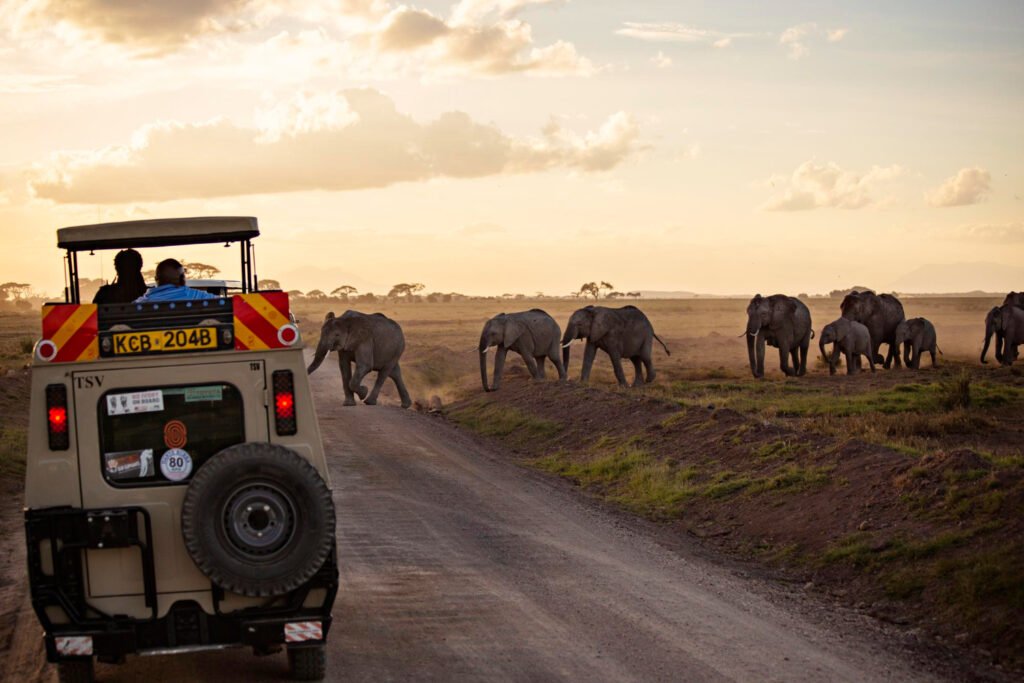
Kenyan safaris commonly use safari vans or 4×4 Land Cruisers.
Safari vans are generally more economical and can work well on standard routes.
Land Cruisers provide higher ground clearance and stronger 4×4 capability.
For longer private safaris, photographers and travellers spending significant time in rougher wildlife areas, a Land Cruiser is often the better option.
Ask before booking.
Never assume the vehicle shown in advertising photographs is automatically the vehicle included in your quotation.
Choosing the Right Safari Accommodation
Kenya offers everything from simple camps to some of Africa’s most luxurious safari properties.
Budget travellers may stay in basic tented camps.
Mid-range safaris generally offer comfortable private rooms, ensuite bathrooms, restaurants and often swimming pools.
Luxury camps may provide private conservancy locations, larger suites, highly personalised service and more exclusive activities.
However, location is just as important as luxury.
A beautiful lodge located far from the wildlife area can create unnecessary driving every morning and afternoon.
Always ask for exact lodge names.
Then check where each property sits in relation to the park or reserve.
Budget Kenya Safari Tours from Germany
Budget safaris allow travellers to experience Kenya without paying luxury prices.
They may use shared vehicles, safari vans and simpler camps.
Wildlife sightings are not automatically worse because accommodation costs less.
A lion does not know whether a visitor sleeps in a €100 room or a €1,000 suite.
The important questions are different.
How many passengers are in the vehicle?
Are park fees included?
Where is the accommodation located?
How much game-drive time is provided?
A transparent budget safari can be excellent.
A suspiciously cheap safari with important costs removed can become expensive later.
Mid-Range Kenya Safaris
Mid-range safaris are often the best choice for first-time German travellers.
They provide comfortable accommodation without pushing the total budget into the luxury category.
Travellers can still use private Land Cruisers, stay in attractive lodges and enjoy the same major parks.
For many visitors, this category offers the strongest balance between comfort and value.
The money saved compared with a very high-end lodge can sometimes be better used to add another night in the Masai Mara or upgrade to a private safari vehicle.
Luxury Kenya Safaris from Germany
Luxury safari travel focuses on more than beautiful accommodation.
A genuinely strong luxury itinerary should improve privacy, location, guiding and convenience.
Travellers may use scheduled or charter flights between destinations.
Camps may be located within private conservancies.
Vehicles may be exclusive to one couple or family.
Service is normally more personalised.
Luxury works particularly well for honeymoons and special celebrations.
However, good planning remains essential.
Spending heavily does not improve an itinerary that changes lodge every night.
Kenya Honeymoon Safari from Germany
Kenya is extremely well suited to honeymoons.
The country combines romantic safari camps with tropical beaches without requiring an extremely complicated journey.
A honeymoon might begin with two nights in Amboseli, continue to three nights in the Masai Mara and finish with four or five nights in Diani.
Couples with larger budgets may use domestic flights instead of long road transfers.
Private vehicles are also worth considering.
A honeymoon should feel personal and relaxed rather than like a group excursion where several strangers decide when every game drive ends.
Kenya Family Safari Tours from Germany
Families should plan differently from couples.
Children can enjoy safari enormously, but very long road transfers on consecutive days can become exhausting.
A family itinerary should therefore slow down.
Two-night stays are generally preferable to constant one-night stops.
Swimming pools can be useful between game drives.
Family rooms and child-friendly meal arrangements should be confirmed in advance.
Parents should provide the children’s ages from the beginning because some activities and accommodation policies depend on age.
German-Speaking Safari Guides in Kenya
German-speaking safari guides are available in Kenya, but they should be requested early.
This is particularly important during busy travel seasons.
A German-speaking guide can make the safari more comfortable for families, older travellers and guests who want detailed explanations of wildlife and local history in their preferred language.
Do not assume German-language guiding is automatically included simply because you booked your safari from Germany.
Ask your operator to confirm it in writing.
Kenya Safari for Wildlife Photographers
Photographers should design their itinerary differently from normal sightseeing travellers.
The first rule is simple: spend more nights in fewer places.
Constant road transfers consume morning and afternoon light.
Private vehicles also make a major difference.
A photographer using a long lens needs space and freedom of movement.
Six photographers packed into one vehicle can make positioning extremely difficult.
Tell your operator what you want to photograph.
A safari designed around elephants in Amboseli will look different from one built around big cats in the Masai Mara.
Why the Safari Guide Matters
A great safari guide does much more than drive.
The guide understands tracks, habitats, animal behaviour and local conditions.
Good guides also understand patience.
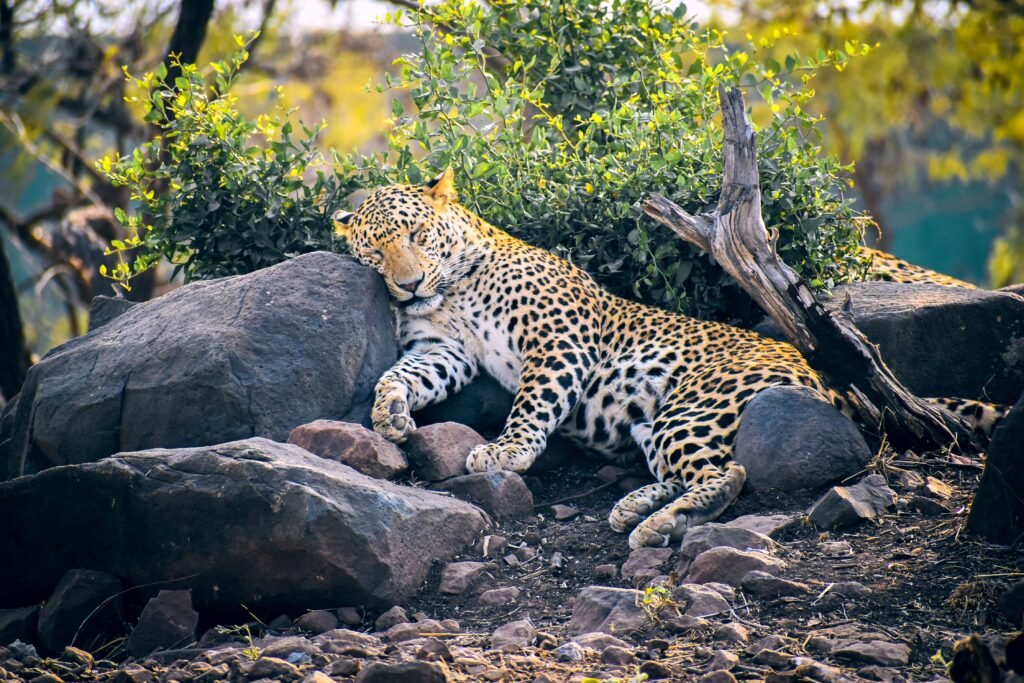
A sleeping leopard may appear boring for twenty minutes.
Then it may suddenly climb a tree.
A cheetah resting in the shade may become active when the temperature falls.
Experienced guides learn to notice small behavioural changes and decide whether to remain at a sighting.
Those decisions often create the most memorable moments of a safari.
Best Time for Kenya Safari Tours from Germany
Kenya can be visited throughout the year.
The best time depends on what the traveller wants.
Drier periods can make wildlife easier to find because vegetation may be thinner and animals gather around reliable water.
Migration months attract visitors to the Masai Mara.
Green-season travel can offer beautiful landscapes, interesting birdlife and fewer vehicles in some periods.
There is therefore no single month that is perfect for everyone.
A honeymooner seeking privacy may prefer a different travel period from a photographer hoping to witness migration activity.
Great Migration Travel
Travellers planning specifically around the Great Migration should book early.
Well-positioned camps can become heavily booked during popular periods.
However, do not treat migration dates as guaranteed.
Rainfall influences the movement of wildlife.
River crossings are even more unpredictable.
Professional safari planning should maximise your chances rather than make promises nature cannot keep.
Green Season Safaris
The greener months deserve more attention than they receive.
Rain can transform Kenya into an intensely colourful landscape.
Photographers benefit from dramatic skies and lush backgrounds.
Birding can be excellent.
Visitor numbers can also be lower during certain periods.
Rain does not automatically mean continuous bad weather.
Conditions vary, and showers may be followed by long periods of usable safari time.
Packing for a Kenya Safari from Germany
Pack for comfort rather than fashion.
Lightweight trousers, breathable shirts and neutral colours work well during game drives.
Bring a warm layer.
Early mornings in Kenya can feel surprisingly cool, particularly at higher elevations and when driving in an open-roof safari vehicle.
A hat, sunscreen, insect repellent, comfortable closed shoes and binoculars are useful.
Travellers using domestic light aircraft should also pay attention to luggage restrictions.
Soft bags are often more practical than large hard-shell suitcases.
Health Preparation
Health advice depends on the traveller’s medical history, destinations and planned activities.
Because medical recommendations can change, German travellers should review current advice from appropriate official or medical sources and speak with a qualified healthcare professional when necessary.
This should be done before travel rather than during the final days before departure.
Travel insurance is also important.
Travellers should understand what their policy covers, particularly medical emergencies, cancellation and safari activities.
Safety for German Travellers in Kenya
German visitors should check current government travel guidance before departure.
As of July 2026, the German Federal Foreign Office maintains travel and security information for Kenya, including a partial travel warning affecting specified areas.
This does not mean that every part of Kenya carries the same risk.
Safari routes commonly used by international travellers are geographically distinct from some areas covered by stronger warnings.
However, conditions can change.
German travellers should therefore consult the latest Federal Foreign Office guidance immediately before departure rather than relying on general statements that Kenya is either completely safe or completely unsafe.
The Federal Foreign Office also recommends that German citizens consider registering in its crisis-preparedness system for foreign travel.
Safari Safety Inside Wildlife Areas
Wildlife areas have their own safety rules.
Remain inside the vehicle unless your guide confirms that you are in an area where getting out is permitted.
Do not ask your guide to approach wildlife dangerously closely.
Avoid loud noises.
Kenya Wildlife Service park guidance instructs visitors to move quietly, remain in vehicles except in designated areas and respect park operating rules.
Wild animals may appear calm, but they should never be treated as tame.
Respecting distance protects both visitors and wildlife.
Choosing a Kenya Safari Company from Germany
Choosing the safari company is one of the most important decisions.
Begin by looking at transparency.
A professional quotation should state the accommodation, meal plan, number of nights, vehicle type, park fees, activities and airport transfers.
The company should also explain what is excluded.
Ask whether your vehicle is private or shared.
Ask whether accommodation is inside the park, in a conservancy or outside the reserve.
Ask about payment terms and cancellation conditions.
These details tell you far more than an attractive website.
Why Communication Matters
Pay attention to how the safari company communicates before payment.
Are your questions answered clearly?
Do they explain why they recommend one route over another?
Do they acknowledge when something cannot be guaranteed?
A trustworthy operator should be comfortable telling you that a river crossing cannot be promised or that an itinerary contains too much driving.
Safari expertise sometimes means advising against what the customer originally requested.
Good planning is about creating the best journey, not simply agreeing with every idea.
Booking Directly With a Kenya Safari Operator
German travellers can book through an international agency or directly with a Kenyan safari company.
Both approaches can work.
Booking directly with a reputable local operator can provide excellent destination knowledge and make customisation easier.
Local companies understand actual driving times, park gates, seasonal conditions and lodge locations.
International agencies may offer other advantages depending on the traveller’s booking preferences.
The important question is not where the company is based.
It is whether the operator is professional, transparent, established and able to provide reliable support throughout the journey.
Understanding Safari Prices
Two seven-day safaris can have dramatically different prices even when the destination names are identical.
One package may include a private 4×4 Land Cruiser, high-quality lodges, all park fees and additional activities.
Another may use shared transport and simpler accommodation.
The cheaper package is not automatically worse.
The expensive one is not automatically better.
Compare the components.
Price becomes meaningful only when you understand what you are receiving.
Road Safari or Flying Safari?
Road safaris are popular because they allow travellers to see more of Kenya between national parks.
They are also generally more affordable.
Flying safaris reduce travel time.
This is particularly useful when combining distant destinations such as the Masai Mara and the coast.
A mixed approach often provides the best balance.
Drive between nearby regions and fly when a road transfer would consume most of the day.
Responsible Safari Travel
Respect for wildlife should remain central to every safari.
Do not encourage guides to crowd animals, block their movement or ignore park rules for a photograph.
Kenya Wildlife Service states that its work focuses on conserving wildlife and healthy habitats for the future.
Travellers contribute by choosing responsible operators, respecting protected areas and supporting accommodation that works positively with conservation and surrounding communities.
Good tourism should strengthen the landscapes people travel to see.
Common Mistakes German Travellers Should Avoid
One of the most common mistakes is attempting to visit too many parks.
Kenya is large.
A route that looks easy on a map may involve many hours of driving.
Another mistake is selecting accommodation only because the room photographs look impressive.
Location matters.
A lodge farther from the main wildlife area can result in wasted game-viewing time.
Travellers should also avoid delaying entry-document preparation until the final days before departure.
Finally, do not expect wildlife to perform according to an itinerary.
Safari rewards patience.
What Should a Kenya Safari Package Include?
A clear quotation may include accommodation, meals according to the stated plan, safari transportation, professional driver-guide services, game drives, park fees and specified airport transfers.
Domestic flights should be listed individually when included.
Possible exclusions may include international flights from Germany, eTA costs, travel insurance, tips, optional balloon safaris, premium drinks and personal expenses.
Ask whenever something is unclear.
Professional safari companies should not rely on vague phrases such as “everything included” without explaining exactly what that means.
Can You Combine Safari and Culture?
Yes.
Kenya’s people and cultures are an important part of the travel experience.
Cultural visits may be incorporated into a safari when organised respectfully.
Travellers should avoid experiences that treat communities only as attractions.
Ask how the visit is structured and whether the local community benefits directly.
Photography should always be respectful and permission should be requested where appropriate.
Meaningful cultural travel should involve learning rather than simply taking photographs and leaving.
Is Kenya Expensive for German Travellers?
Safari is generally not a very cheap type of holiday.
Park fees, vehicles, guides, fuel and remote accommodation all contribute to the price.
However, Kenya offers substantial flexibility.
Travellers can select budget, mid-range or luxury accommodation.
Shared safaris reduce transport costs.
Private travel costs more but provides greater freedom.
Rather than asking only for the cheapest package, decide on a realistic overall budget and ask the safari company to design within it.
Is Kenya Good for German Families?
Yes.
Kenya can be a wonderful family destination when the itinerary is designed properly.
Children often enjoy spotting animals and learning from guides.
However, parents should avoid excessive transfer times.
A private vehicle is highly useful because the family controls the pace.
Hotels with family rooms and swimming pools can also make the trip easier.
Provide children’s ages when requesting the safari so that suitable accommodation and activities can be selected from the beginning.
Is Kenya Good for a Honeymoon from Germany?
Kenya is one of East Africa’s strongest honeymoon destinations.
It offers wildlife, beautiful camps, private safari experiences and Indian Ocean beaches.
A honeymoon does not need six different parks.
A better itinerary might spend two nights in Amboseli, three nights in the Masai Mara and several nights on the coast.
The fewer transitions create a more relaxed journey.
For couples with sufficient budget, flying between some destinations can make the experience even smoother.
Practical 10-Day Kenya Safari Example
A practical ten-day journey might begin with an overnight stay in Nairobi after the flight from Germany.
The following morning, drive to Amboseli for two nights.
Continue toward Lake Naivasha for a different experience in the Rift Valley.
From there, travel to the Masai Mara and spend three nights on safari.
The remaining time can be used for Nairobi or another destination depending on international flight schedules.
This is only an example.
A professional itinerary should always be adjusted according to travel dates, interests and budget.
Practical 14-Day Safari and Beach Example
A two-week journey can provide a more complete Kenyan experience.
Begin in Nairobi before travelling to Amboseli.
Continue through the Rift Valley and eventually spend several nights in the Masai Mara.
After the wildlife portion, fly to Kenya’s coast.
Spend four or five nights in Diani or Watamu before returning for your international departure.
This balance works well because the beach section provides genuine recovery time after the safari.
How to Judge Safari Information Online
Travel information should be treated differently depending on how quickly it can change.
Advice about not rushing a safari itinerary is unlikely to become outdated.
Entry requirements, security advisories, eTA procedures, park fees and flight schedules can change much faster.
For that reason, travellers should verify time-sensitive information through authoritative sources.
For German travellers, the Federal Foreign Office is a key source for current travel and security guidance.
For Kenya entry authorisation, travellers should use Kenya’s official eTA system.
For information concerning Kenya’s national parks and conservation areas managed by KWS, the Kenya Wildlife Service is an appropriate primary source.
This distinction between lasting travel expertise and information that requires current verification is important when planning safely.
Our Practical Approach to Planning Kenya Safari Tours from Germany
A well-designed safari begins with the traveller.
Before choosing parks, establish the travel dates, number of guests, number of available days, approximate budget and most important interests.
If elephants are a priority, give Amboseli enough time.
If predators and open grasslands are the dream, focus more heavily on the Masai Mara.
If conservation and rhinos matter, consider Ol Pejeta.
If the family wants a combination of activity and safari, Lake Naivasha may fit naturally.
If relaxation is important, remove one wildlife destination and add several beach nights.
This approach creates better Kenya Safari Tours from Germany than simply copying an itinerary with the largest possible number of national parks.
Frequently Asked Questions About Kenya Safari Tours from Germany
How many days should I spend on safari in Kenya?
Seven to ten safari days works well for most first-time visitors. Twelve to fourteen days is better when combining safari and beach.
Do German citizens need an eTA for Kenya?
Kenya currently operates an electronic travel authorisation system, and the German Federal Foreign Office confirms the eTA requirement under current entry rules. Travellers should verify their exact status before departure because rules can change.
When should I apply for the Kenya eTA?
Kenya’s official eTA guidance says applications are typically processed in around three days but recommends applying at least two weeks before travel.
Can I request a German-speaking safari guide?
Yes. German-speaking guides are available, but they should be requested and confirmed in advance.
What is the best Kenya safari for first-time travellers?
Amboseli, the Rift Valley and the Masai Mara provide a strong introduction because they combine different landscapes and wildlife experiences.
Is a private safari worth it?
For couples, families and photographers, often yes. Private travel offers considerably more flexibility over departure times, wildlife sightings and the pace of each game drive.
Can I combine Kenya safari with Diani Beach?
Yes. Safari and Diani is one of the most natural combinations for visitors who want both wildlife and beach relaxation.
Is Kenya suitable for children?
Yes, provided the itinerary avoids excessive driving and accommodation is selected with children’s ages and family requirements in mind.
Should I use a safari van or Land Cruiser?
Both can work. Land Cruisers generally provide stronger 4×4 capability and are often preferred for longer private safaris. Safari vans can provide good value on budget and standard routes.
Is Kenya safe for German tourists?
Many international travellers visit Kenya for established safari routes, but current conditions vary by region. German citizens should review the latest Federal Foreign Office travel and security guidance, which currently includes a partial travel warning for specified areas.
Final Thoughts on Kenya Safari Tours from Germany
Travelling from Germany to Kenya can become much more than a normal holiday.
The journey might begin with the excitement of arriving in Nairobi and meeting your safari guide for the first time.
A day later, you could be watching elephants cross the open plains of Amboseli while clouds move around Mount Kilimanjaro.
Several days later, the scenery changes again as you travel through the Rift Valley.
Then comes the Masai Mara.
Early in the morning, the grass may still be wet with dew as the vehicle moves slowly across the plains. A group of giraffes stands on the horizon. Lions rest after a night of hunting. Somewhere in the distance, thousands of grazing animals spread across the landscape.
Later, the journey can change completely.
Instead of waking before sunrise for another game drive, you wake beside the Indian Ocean in Diani or Watamu.
This contrast is one of the greatest strengths of Kenya Safari Tours from Germany.
The best safari is not necessarily the itinerary with the most parks, the most expensive hotels or the longest list of activities.
It is the journey that gives you enough time to experience each place.
Choose your safari company carefully. Ask exactly what is included. Confirm the vehicle and accommodation. Request a German-speaking guide early if this is important to you. Verify entry requirements and government travel advice before departure.
Most importantly, travel with realistic expectations.
Wildlife cannot be scheduled.
A leopard may disappear before the vehicle arrives. Kilimanjaro may hide behind clouds. The wildebeest may decide not to cross the river that afternoon.
Then, without warning, something entirely unexpected happens.
An elephant walks directly across the road. A cheetah begins hunting. A lion calls in the darkness outside camp.
Those unscripted moments are often what travellers remember most.
For visitors leaving Germany in search of wildlife, landscapes, culture and adventure, Kenya remains one of Africa’s most complete and rewarding safari destinations.