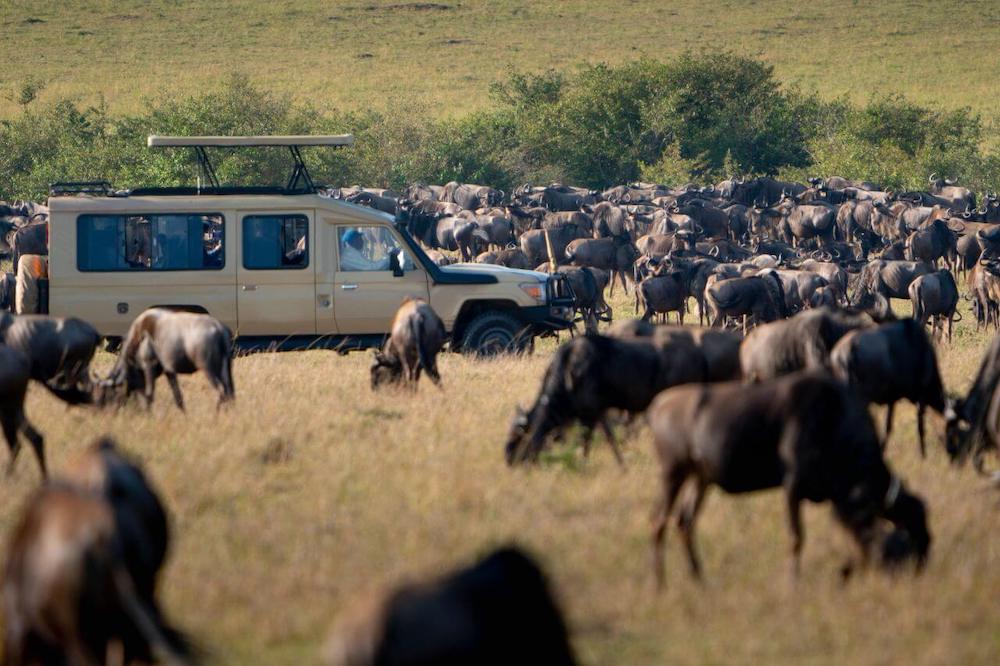
The Ndutu Calving Safari is not just another chapter of the Great Migration—it is the foundation of the entire phenomenon. This is where the migration is reborn. Every year, between January and March, the southern Serengeti’s Ndutu region becomes the epicenter of life on the African plains as hundreds of thousands of pregnant wildebeest converge on the short-grass plains to give birth. What follows is one of the most intense, emotional, and wildlife-rich spectacles on Earth.
Unlike river crossings, which are unpredictable and fleeting, calving season is reliable, sustained, and extraordinarily dense. The result is a safari experience defined not by waiting, but by constant action. From sunrise to sunset, the plains are alive with newborn calves, vigilant mothers, stalking predators, and dramatic interactions unfolding in every direction. For travelers who want certainty, immersion, and raw wildlife behavior, Ndutu consistently delivers more per game drive than any other migration stage.
Understanding Ndutu: Where the Great Migration Truly Begins
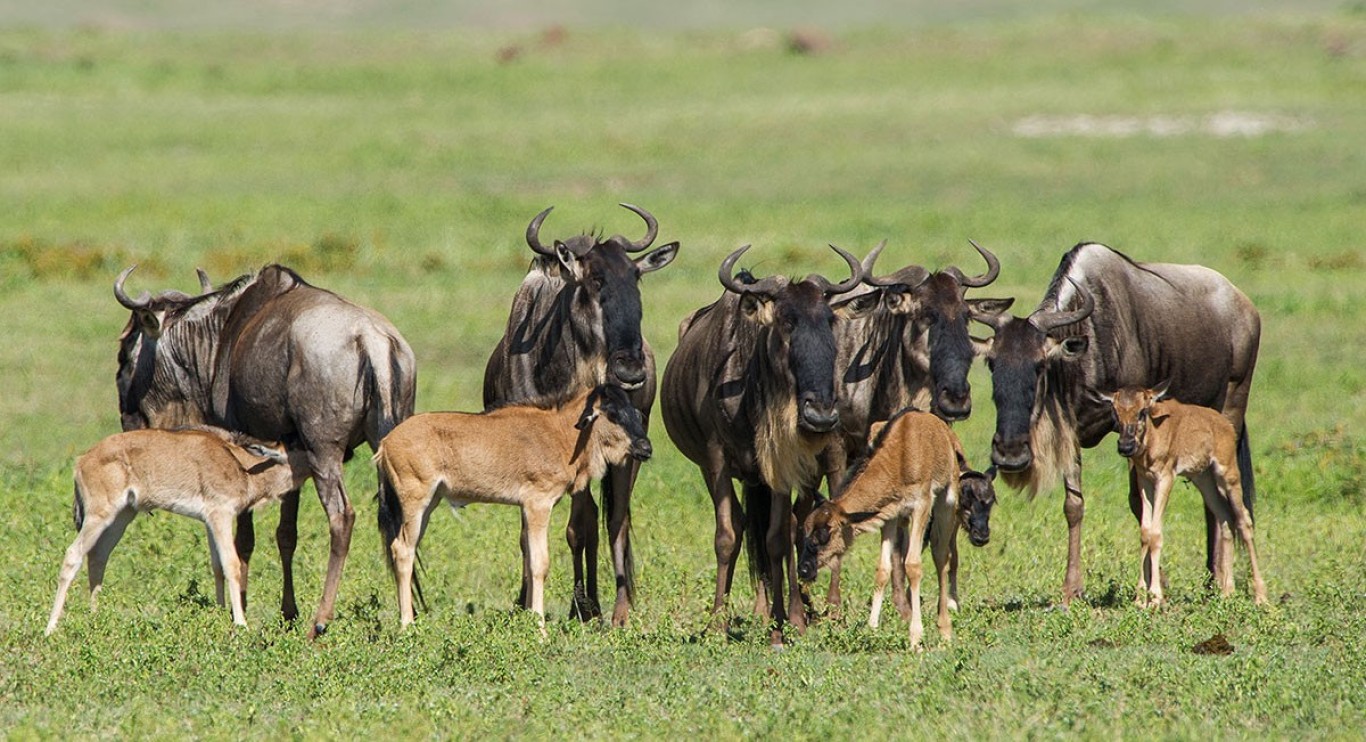
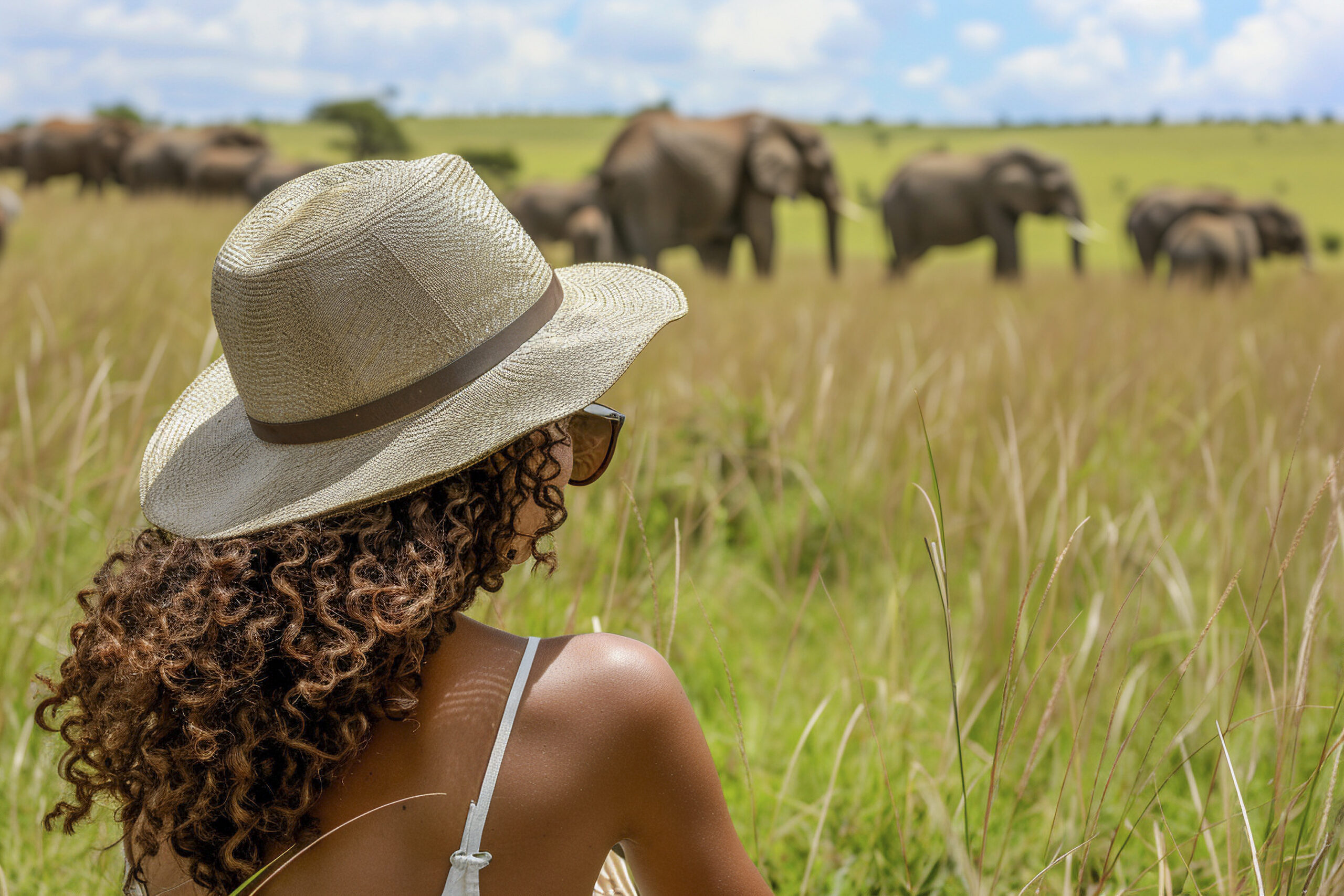
Ndutu lies in the southern Serengeti ecosystem, straddling the boundary between Serengeti National Park and the Ngorongoro Conservation Area. This positioning is critical. Seasonal rains transform the region into a carpet of nutrient-rich short grass, grown from volcanic soils that are perfectly suited for pregnant wildebeest. These grasses are high in calcium and protein, essential for lactation and calf development.
The short grass also provides visibility. Calves can see predators approaching, mothers can react quickly, and herds can move freely without obstruction. Nature has effectively engineered Ndutu as the safest possible nursery for the migration. This is why, year after year, the herds return with astonishing consistency.
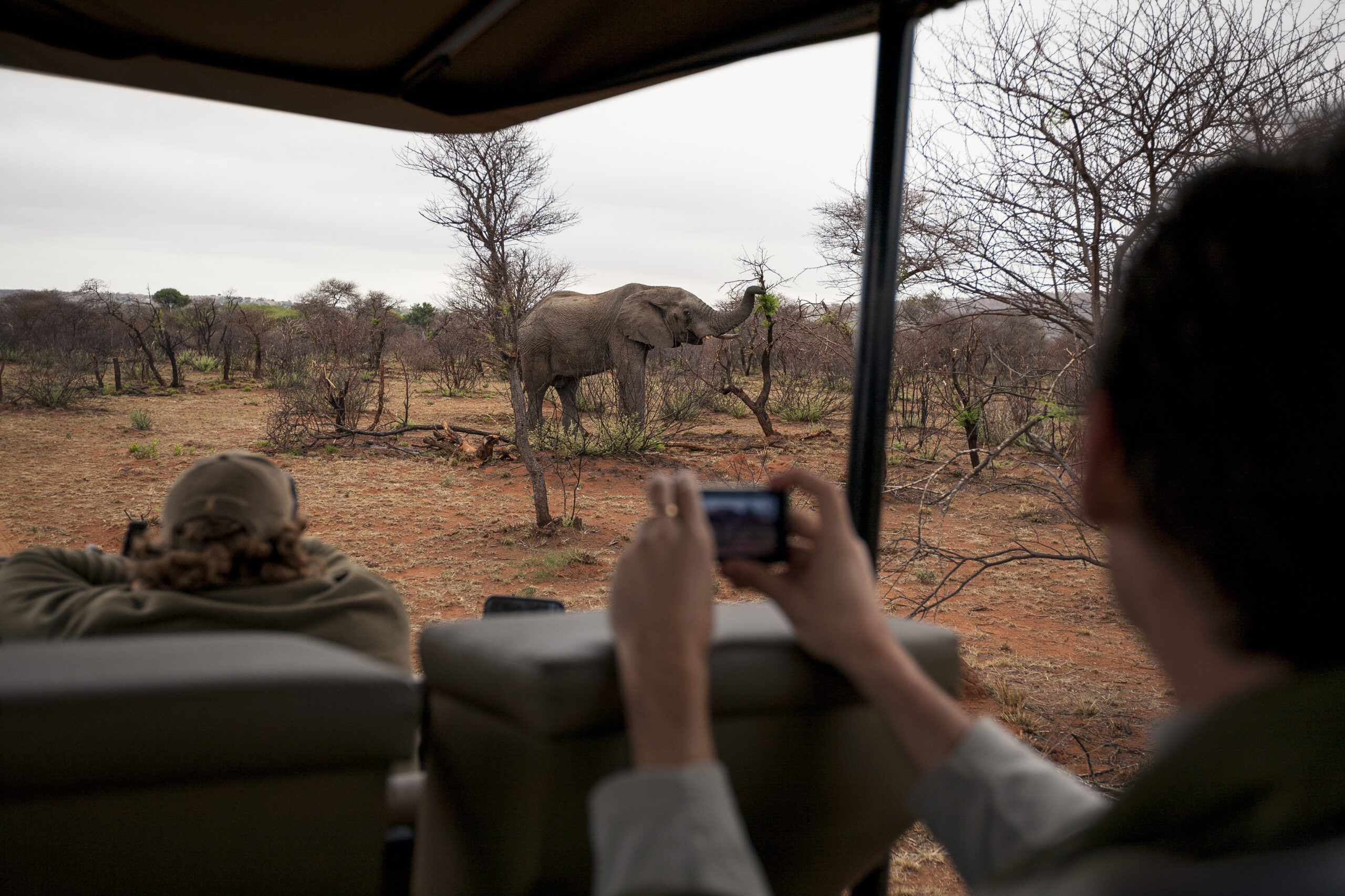
A defining feature of Ndutu is that it sits within a conservation area, not a strict national park. This allows off-road driving, a rare privilege in East Africa. Off-road access fundamentally changes the safari experience. Guides are not confined to tracks; they can follow behavior, not roads. This results in longer sightings, better positioning, and deeper immersion—particularly valuable during calving when action can unfold far from established routes.
The Calving Event: Birth, Instinct, and Survival at Massive Scale
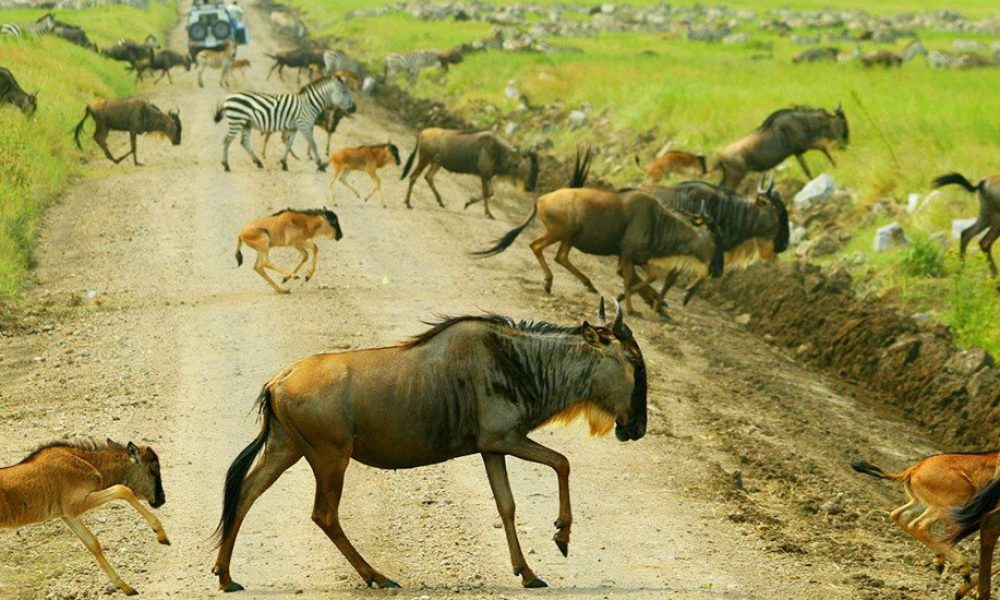
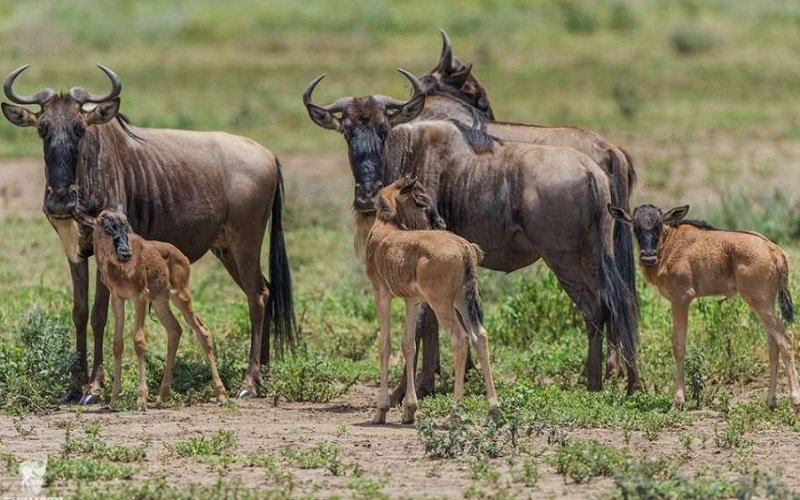
At the height of the calving season, 8,000 to 10,000 wildebeest calves are born every day. The numbers are staggering. Across the plains, births happen minutes apart. Calves emerge, collapse, struggle, stand, and begin to move in a matter of minutes. Within half an hour, most are walking. Within a few hours, they can run.
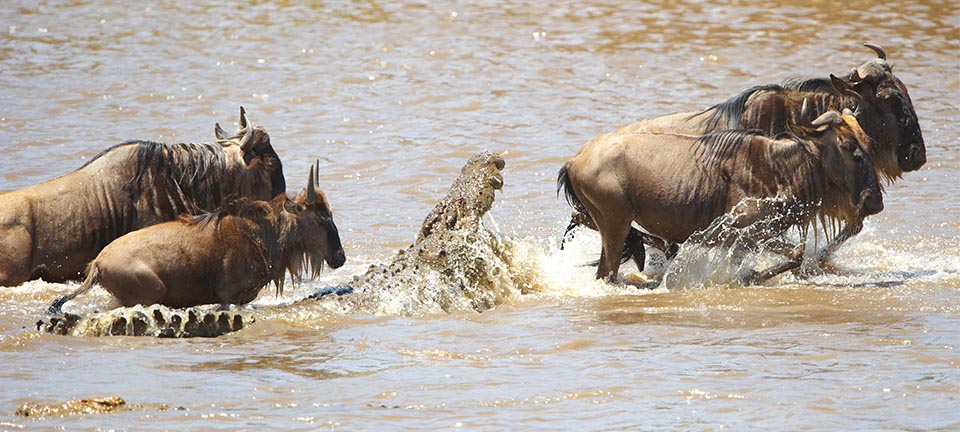
This speed is not coincidence—it is survival. The evolutionary pressure is relentless. Calves that cannot move quickly are taken. But the strategy works because of volume. Predators simply cannot catch them all. The overwhelming number of births ensures the survival of the species, even as predators feast.
For safari travelers, this creates a continuous narrative. You are not witnessing isolated events but participating in a living system where life and death are interwoven at every moment. It is common to see a birth in the morning, a hunt at midday, and scavengers at dusk—all within a single game drive.
Predator Dynamics in Ndutu: Strategy Over Spectacle

Ndutu is where predator behavior becomes most visible, strategic, and frequent. Lions organize their movements around calving hotspots, often establishing temporary territories near dense herds. Lionesses specialize in calf hunting, coordinating subtle movements that are fascinating to observe over extended periods.
Cheetahs thrive in Ndutu’s open terrain. The short grass plains allow them to reach full speed, making Ndutu one of the best places in Africa to witness high-velocity hunts. Unlike river crossings, where action is brief and chaotic, cheetah hunts in Ndutu often unfold over minutes, offering photographers and observers time to follow the chase.
Hyenas play a constant role. They test herd edges, shadow predators, steal kills, and hunt opportunistically. Their intelligence and persistence are on full display during calving season. Leopards, though more elusive, are present in wooded areas and along lake edges, adding another layer to the ecosystem.
What sets Ndutu apart is frequency. Predator encounters are not rare highlights—they are the rhythm of the day.
Ndutu vs River Crossings: Reliability vs Risk

River crossings dominate popular imagination, but they come with uncertainty. Travelers may wait days for a crossing that lasts minutes. Weather, water levels, and herd decisions are unpredictable. Crowds can be heavy, and positioning is often restricted to riverbanks.
Ndutu offers the opposite experience. Calving follows a predictable seasonal pattern tied to rainfall and grass growth. Wildlife density is high every day. Off-road access allows flexibility. Crowds are lighter than peak river-crossing season. For families, photographers, and travelers with limited time, Ndutu significantly reduces risk while delivering richer overall exposure to wildlife behavior.
Best Time to Visit Ndutu: A Detailed Month-by-Month Breakdown
December
Herds begin arriving as rains green the plains. Landscapes are lush, birdlife explodes, and anticipation builds. Excellent for travelers who enjoy scenery and early migration movement.
January
Calving begins. Newborn sightings increase daily, predator activity intensifies, and photographic opportunities multiply. A strong balance between action and availability.
February
The peak. Maximum calves, maximum predators, nonstop interaction. February is the most sought-after month and requires early booking.
March
Calves are stronger and herds begin shifting north. Wildlife viewing remains excellent, with slightly fewer visitors and improved availability.
Ndutu Calving Safari Packages & Prices Explained in Depth

Budget & Value Safaris
Typically USD 350–550 per person per night. These safaris focus on wildlife rather than luxury, using comfortable tented camps and shared vehicles. Ideal for adventurous travelers who prioritize sightings.
Mid-Range Safaris
Typically USD 600–850 per person per night. Better-located camps, ensuite facilities, and more flexible game drives. Ideal for couples and families.
Luxury & Private Safaris
Typically USD 900–1,400+ per person per night. Prime locations, private vehicles, highly experienced guides, and seamless logistics. Best for photographers, honeymooners, and travelers seeking exclusivity.
In Ndutu, location matters more than star rating. A modest camp in the right place will outperform a luxury lodge too far from the plains.
Ndutu Safari Camps: How to Choose Correctly
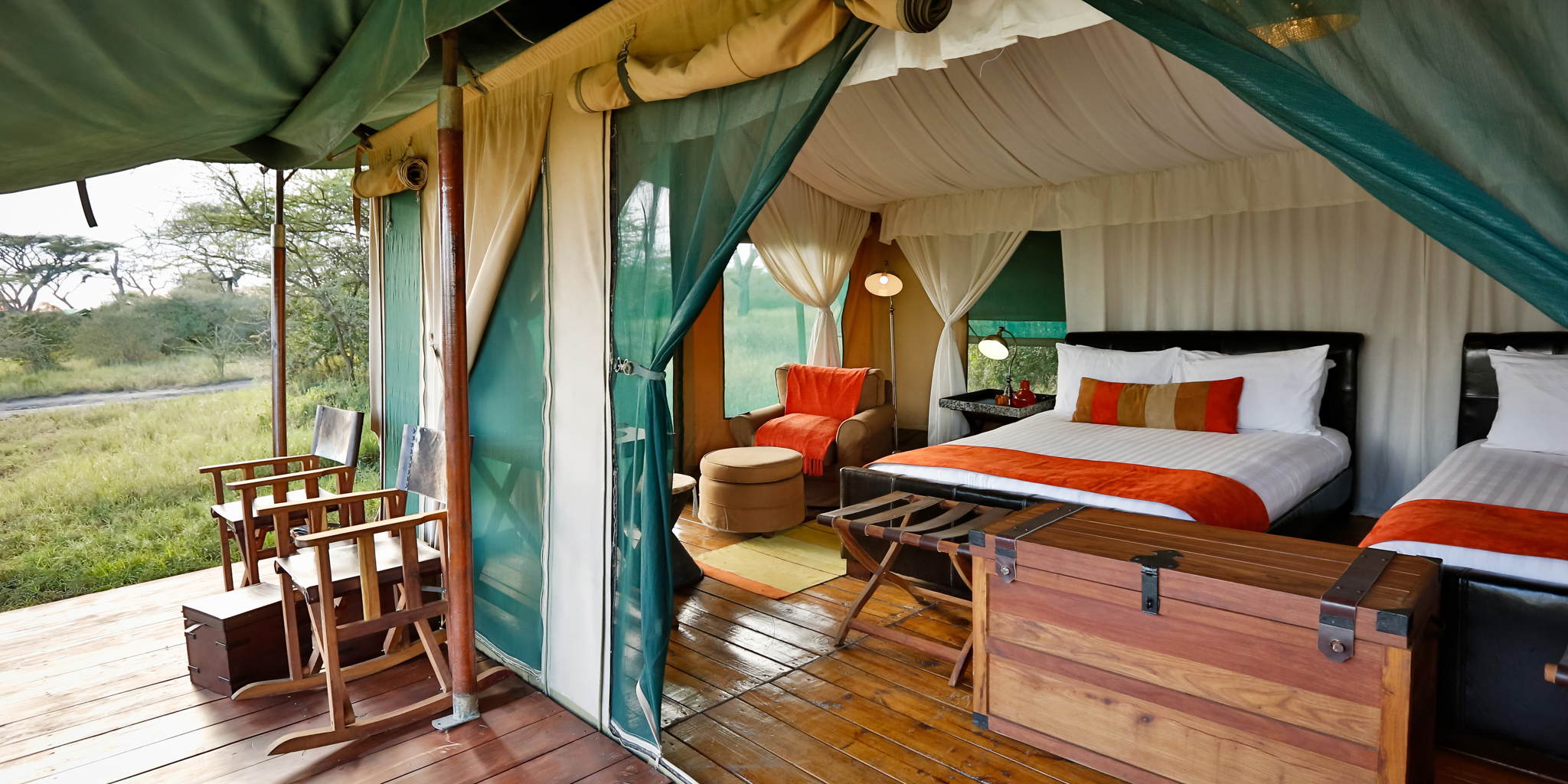
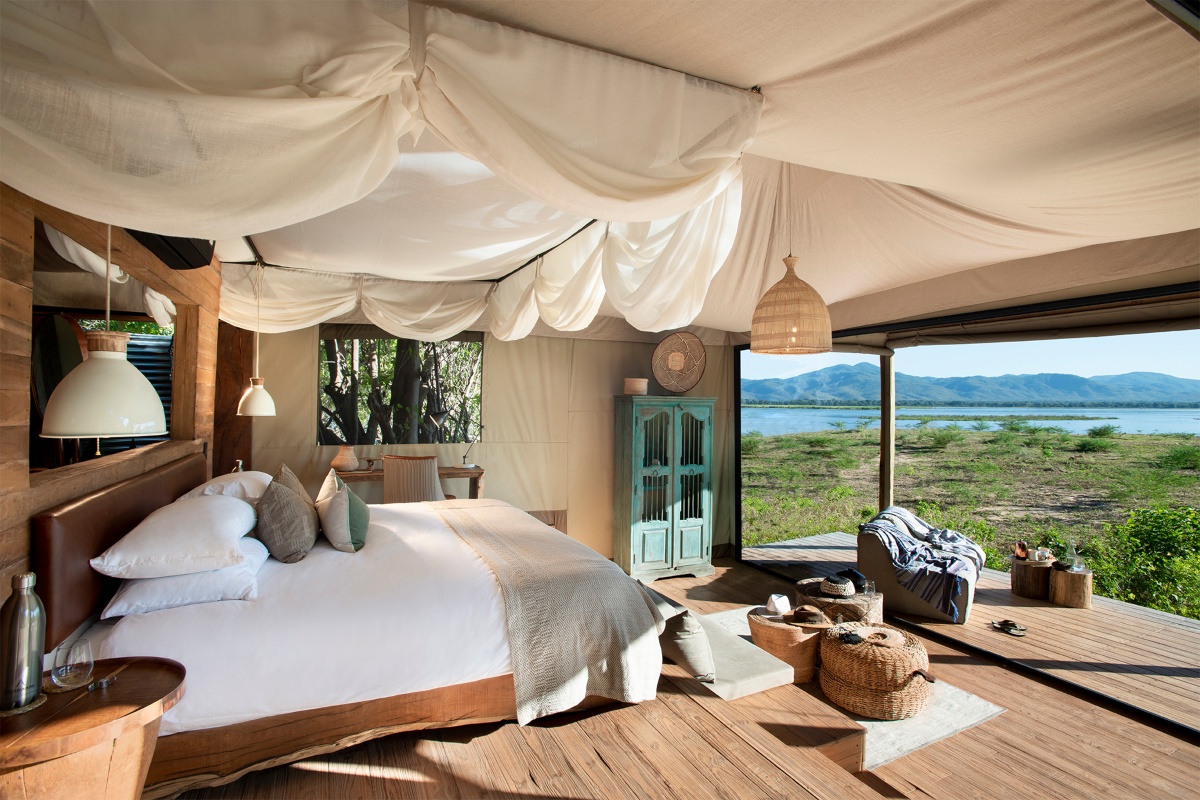
Mobile migration camps move with the herds and offer unparalleled proximity. Permanent tented camps provide stability and comfort while maintaining excellent access. Luxury lodges add space, dining, and amenities but must still be well positioned.
When choosing a camp, prioritize proximity to calving grounds, guide expertise, flexible driving hours, and off-road access over decorative luxury.
Ndutu for Photography Safaris: A Masterclass in Wildlife Imaging

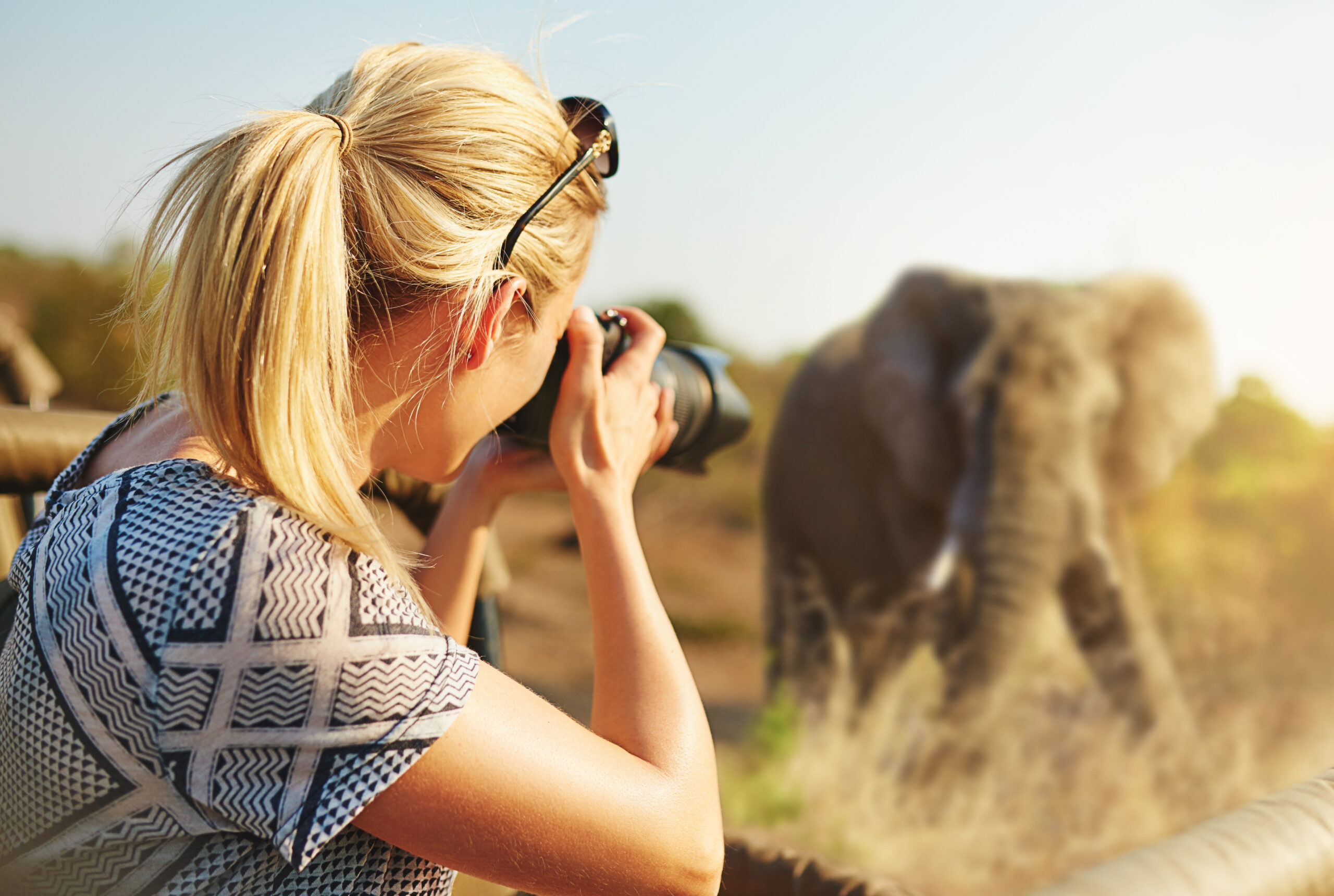
Ndutu is among Africa’s top photography destinations. Open plains provide unobstructed sightlines, short grass reflects light beautifully, and dramatic skies add mood. Off-road driving allows precise positioning for angle and light.
For photographers, Ndutu offers volume and patience—many opportunities, repeated encounters, and time to refine compositions rather than racing between sightings.
Combining Ndutu with Other Tanzania Highlights
Ndutu pairs naturally with the Ngorongoro Crater, offering dense Big Five viewing, or with central Serengeti regions for habitat diversity. These combinations balance intense calving action with broader ecosystem exploration.
Extending Ndutu Beyond Tanzania
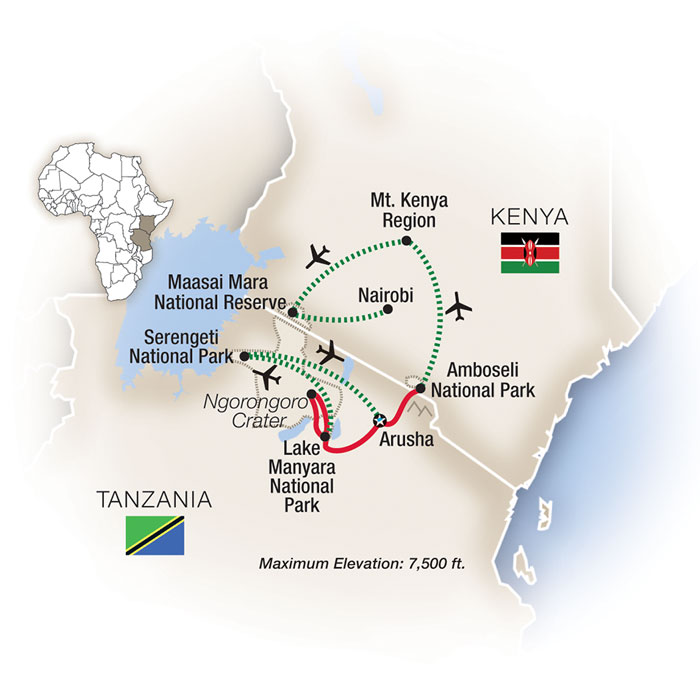
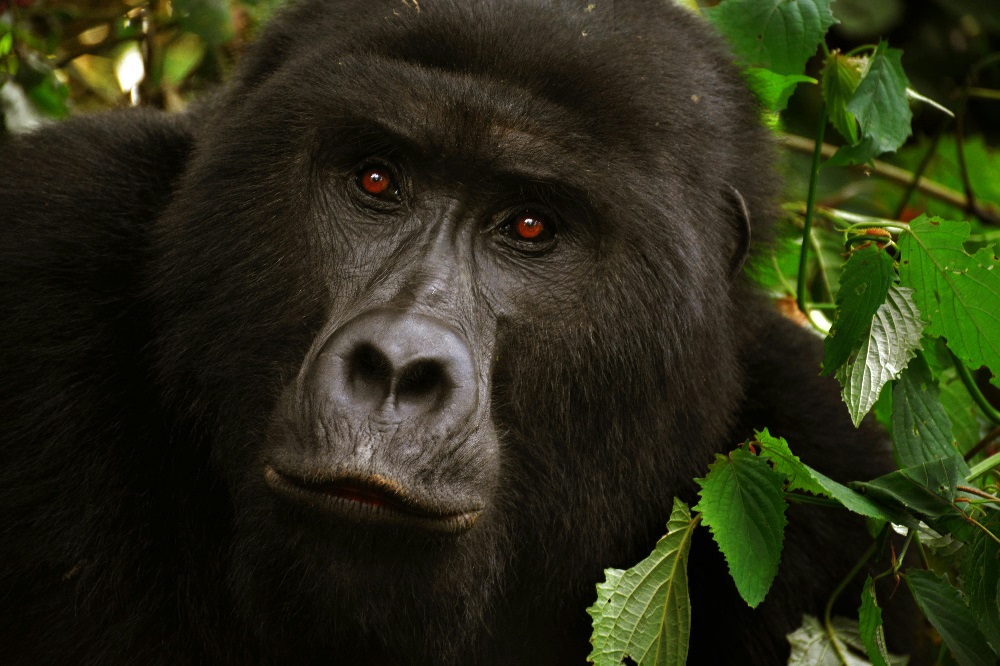
Many travelers extend Ndutu safaris into Kenya or add gorilla trekking in Uganda or Rwanda. The contrast between open plains and dense rainforest adds emotional depth and transforms the trip into a multi-ecosystem East Africa journey.
Practical Planning Advice for Ndutu Calving Safaris
Prime camps sell out 6–9 months in advance, especially for February. Pack for cool mornings, warm afternoons, and occasional rain. Photographers should bring dust protection and beanbags. Choose operators with deep seasonal knowledge rather than generic itineraries.
Who Should Choose a Ndutu Calving Safari
Ndutu is ideal for travelers who value behavior over spectacle, density over chance, and immersion over crowds. It suits families, photographers, couples, first-time safari guests, and seasoned wildlife travelers alike.
Book Your Ndutu Calving Safari with Confidence
Planning Ndutu requires precise timing and deep regional expertise. Ravina Tours and Travel specializes in Ndutu calving safaris, helping travelers secure prime camps, compare packages, and design seamless itineraries across Tanzania, Kenya, and gorilla trekking destinations.
Call / WhatsApp: +254 722 103 340
Email: info@ravinatoursandtravels.com
Website: www.ravinatoursandtravels.com