Mount Kilimanjaro Destination

Mount Kilimanjaro
Welcome to Mount Kilimanjaro Destination
The Mount Kilimanjaro climbing normally offers great trekking experiences to Africa’s highest peak. There are total of 7 summit points to Mount Kilimanjaro, each offering unique sceneries with different difficulties and durations to the summit. There are other routes that are shorter and direct, others being longer and with better acclimatization. Whether you are a seasoned hiker or just but a beginner, there is always something for you.


Have you ever imagined yourself standing on the summit of Africa’s highest mountain, at least once in your life? Many adventurers dream of climbing Kilimanjaro at least once in their lives, and if you are a nature enthusiast or seeking personal resilience, physical fitness, or simply a sense of achievement, Mt. Kilimanjaro is the best destination for you. However, it can be quite challenging to find the best tour operator for an extraordinary experience, especially with so many companies offering Kilimanjaro trekking or hiking packages. But that’s where Ravina Tours comes in! We offer unparalleled and budget-friendly Mt. Kilimanjaro climbing tours. Whether you are looking for a challenging climbing experience or a slow-paced Kilimanjaro hike, our tailored itineraries make climbing Kilimanjaro accessible to adventurers from all over the world. At Ravina Tours, we consider the Mt. Kilimanjaro climbing tour one of our most treasured and carefully crafted hiking tours.
Lauded by climbers and industry professionals as being among the best Kilimanjaro tour operators, Ravina provides its clients with a unique Kilimanjaro trip and climbing experiences. Our company seeks the services of professional mountain guides who are Kilimanjaro climbing experts, adding an unparalleled level of summit success and promoting risk awareness among climbers. As such, climbing Mt. Kilimanjaro with Ravina Tours and Travels will allow you to enjoy awe-inspiring views and stunning flora and fauna across five climate zones as you traverse the mountain’s terrain.
But before you embark on this hiking experience, there are a few things you should know.
Mt. Kilimanjaro’s Location and Origin
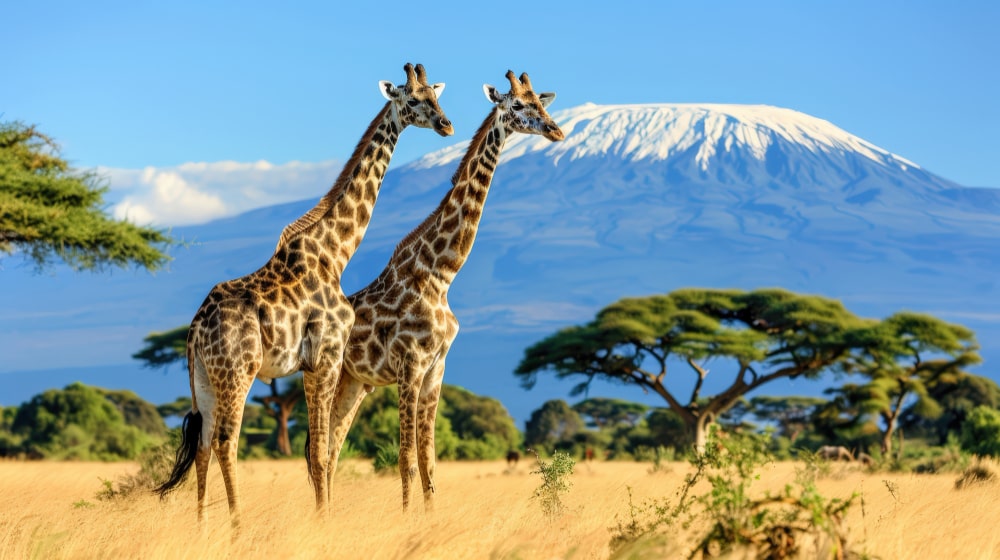
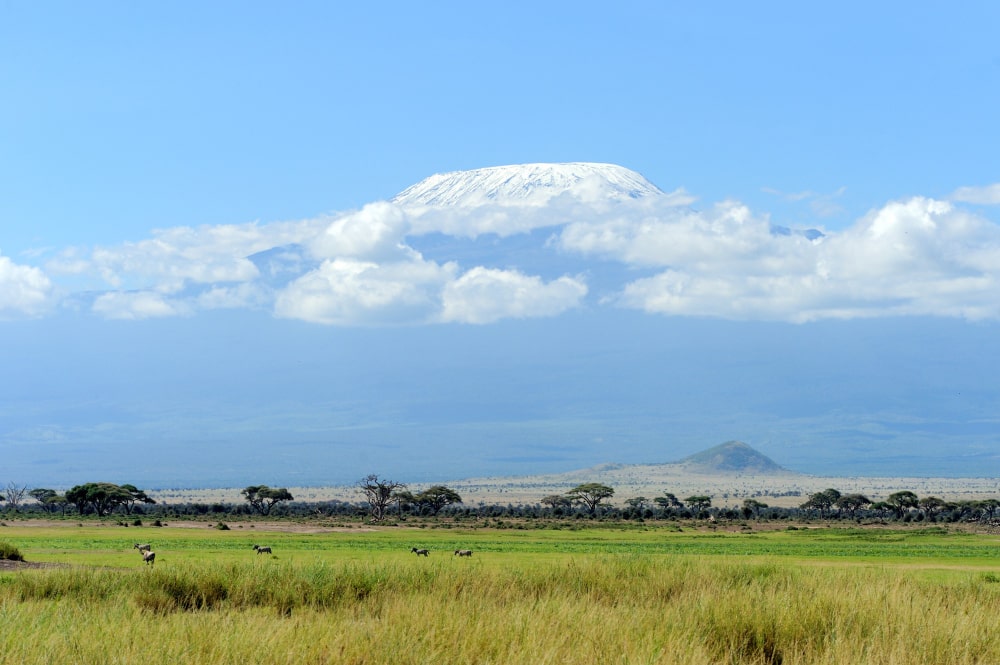
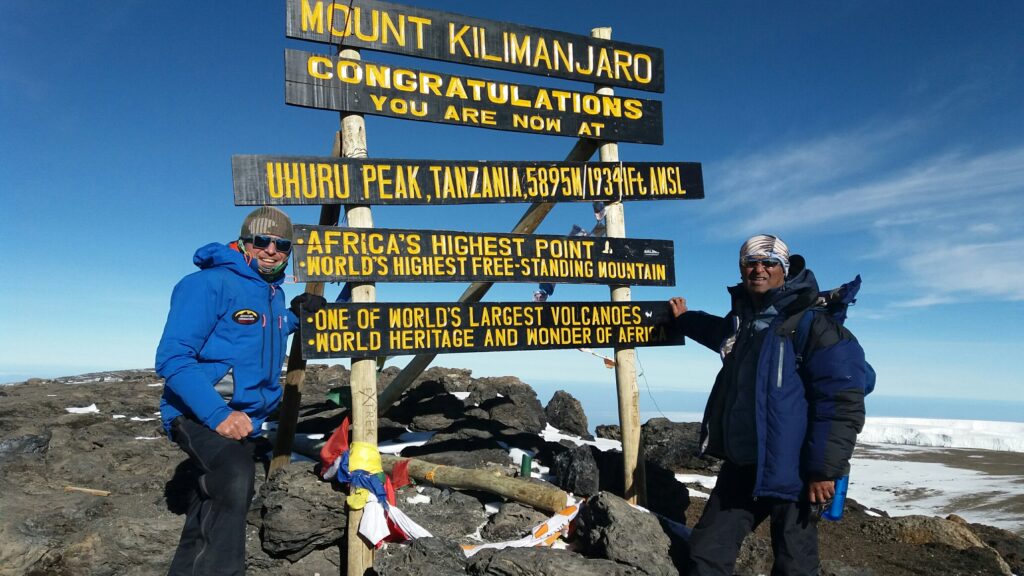
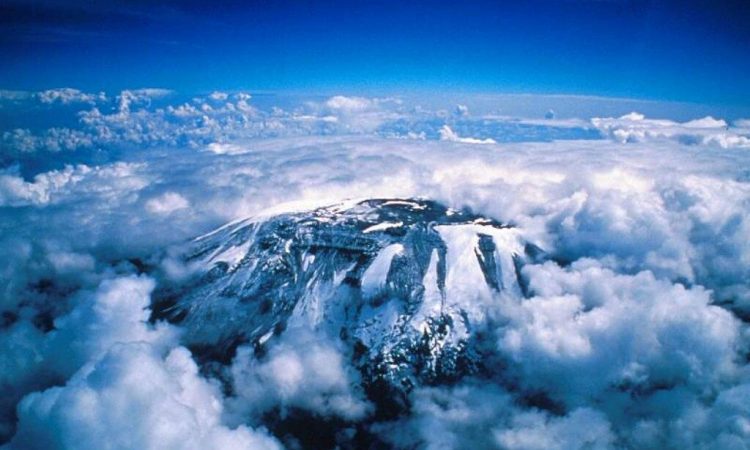
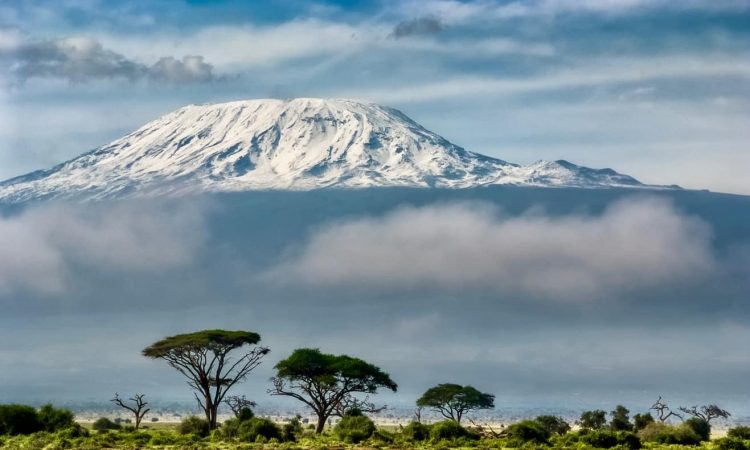
As the sky giant of Africa, Mt. Kilimanjaro beautifully and majestically rises into the clouds 5,895 m/19,341 ft above sea level. Mt. Kilimanjaro is the highest mountain in Africa, making it a desired destination for climbers who seek a challenging and thrilling hiking experience. But you might ask, where is Mt. Kilimanjaro located? The captivating mountain is located in the Northern parts of Tanzania, near the Kenyan border. Specifically, Mt. Kilimanjaro is found within Kilimanjaro National Park in Tanzania, but is still visible from the Amboseli National Park in Kenya.
The Origin of Mt. Kilimanjaro
One may wonder, how did Mt. Kilimanjaro form? Well, here are some interesting facts you need to know before embarking on a hiking experience on Africa’s tallest cloud-kisser. The mountain is believed to have formed approximately two million years ago through volcanic activity and tectonic plate movements related to the formation of the Great Rift Valley in East Africa. How amazing is that? I know, right? The striking beauty of the sky is highlighted by three volcanic cones: Kibo, Mawenzi, and Shira. However, Shiro, which was the first cone to form, has been mostly eroded. The second cone to form was the Mawenzi cone, followed by Kibo, which houses Mt. Kilimanjaro’s tallest peak (5,895 m/19,341 ft above sea level).
While Mt. Kilimanjaro is a great African mountain, there is relatively little history recorded about it. However, the name “Kilimanjaro” is believed to have been derived from the Swahili name “Kilima”, which means mountain.
How can i get to Mount Kilimanjaro?
To get to Mt. Kilimanjaro, you can use several routes. To access Mt. Kilimanjaro, you first have to travel to Tanzania. The best option to access Mt. Kilimanjaro is by flying from Nairobi’s Jomo Kenyatta International Airport (JKIA) or Wilson Airport to Kilimanjaro International Airport (KIA) (JRO). You will then take a taxi/shuttle, which will be pre-booked by your tour operator, from the airport to Moshi or Arusha (1-1.5 hours).
If you are craving for extra adventure, trying to save money, or have sufficient time, you may decide to access Kilimanjaro by road. By road, you will take a bus/shuttle from Nairobi to Moshi or Arusha. Once you arrive at Moshi or Arusha, your tour operator will handle the transfer to Mt. Kilimanjaro’s starting gates. It is, however, important to note that roads to Kilimanjaro can be quite rough at times. Depending on where you will be travelling from, you can fly directly to Kilimanjaro International Airport, through the Gulf via Qatar Airlines or Emirates, or through Europe using KLM.
You can decide to fly into Tanzania’s capital, that is, Dar-es-salaam, for a short internal flight to Kilimanjaro International Airport. Alternatively, you can fly to Kenya’s JKIA for a connection to Kilimanjaro International Airport (JRO) using airlines such as Kenya Airways or Precision Air. You can fly to Amboseli and drive/transfer across the border to Moshi or Arusha, where an operator will handle your transfer to Mt. Kilimanjaro’s starting gates.
However, if you are looking for a budget-friendly flight to Kilimanjaro International Airport (JRO), the best option is to fly into Nairobi if you are a climber from other parts of the globe, and then take a flight from Nairobi to Kilimanjaro International Airport (JRO).

Ultimate africa experiences
Guides on How to Experience Africa in Extraordinary Way!
Kenya Safari Tours From United Kingdom
United Kingdom
Kenya Safari Tours From Mombasa
Kenya Safari Tours from France
Kenya Safari Trips from Canada
Kenya Safari Tours from Germany
Bird Watching Kenya Safari Tours
Fly-In Kenya Safari Tours
Cheap Kenya Safari Tours From Nairobi
All Inclusive Kenya Safari Tours
Budget Camping Kenya Safari Tours
Mid Range Kenya Safari Tours
Affordable Kenya Safari Tours
Germany
Wildebeest migrations safaris in Kenya & Tanzania
Zanzibar Safari Holidays
Kenya Luxury Safari Packages
Kenya Group Joining Safaris
Kenya Flying Safari Packages
Kenya Budget Safari Tours
Gorilla Trekking Rwanda
Gorilla Trekking Uganda
Tanzania Safari Tours
Kenya Safari Tours
Mount Kilimanjaro
Honeymoon Safari
Kenya Travel Seasons: Safari Weather, Migration Timing & Tips
Thank You
Terms & Conditions
Privacy Policy
CSR
Blog
Tailor Made Tour
Contact Us
About Us
Home
Our Top Mount Kilimanjaro Climbing Expedition
Mount Kilimanjaro is one of the tallest mountains in Africa towering an elevation level of 5,895 meters above the sea level. It is the largest free-standing Mountain worldwide with 7 summit points. It has a snow capped peak towering above the vast savannah. Whereas mount Kilimanjaro is a dormant volcano mountain, it is quite an inspiration to many climbers around the world. As a premium Mount Kilimanjaro trekking tours and travel company, we manage every aspect of your expedition professionally and we never outsource or act as a third-party travel agent.
In a nutshell, Mount Kilimanjaro has 7 routes leading to summit point.One of the routes basically starts from the northern side whereas the rest are from the southern side.The main trick to ensuring that you summit is to have more days at the mountain to maximize on acclimatization.
There are several routes used to climb Mt. Kilimanjaro all year round. The Machame Route offers the best experience of the diverse ecosystems you pass through, and can be taken by individuals who have no hiking experience, as well as those who have prior experience due to its steady paths and accommodation huts. The Machame route also has good acclimatization as the altitudes for nights 2, 3, and 4 are almost similar, allowing the body to get used to the high elevation. The Lemoshpo route, which joins the Machame Route, is slightly longer and takes the hikers through the lower forest, allowing good acclimatization. The Marangu Route, nicknamed “Coca-Cola Route,” is Kilimanjaro’s oldest and most popular path, and is known for its unique hut accommodation (no camping needed) and affordability. However, the Marangu Route has a low success rate due to the high altitude gains along the trail, often attempted in 5 days. The Rongai route is the least taken route and is recommended for experienced hikers. The Marangu Route. Whichever route you choose to use, Climbing Kilimanjaro should be done in the presence of a qualified guide and proper adult supervision for safety. In addition, the route you choose to climb Mt. Kilimanjaro should be dependent on your budget and the experience you seek on the adventure.
The Lemosho Route
Lemosho route when Climbing Mount Kilimanjaro is well known for its panoramic views and also excellent acclimatization. Trekking Mount Kilimanjaro through this route would typically take between 6 and 8 days and it merges with the Machame route near Lava tower.
This route is considered by many climbers as the most beautiful route up Mount Kilimanjaro and is very popular because of low foot traffic and high rate of summit success. The Lemosho route begins at Londorossi on the western side of Kilimanjaro.
In the first two days of your trek using the Lemosho route, you will advance through the rainforest and later through the beautiful sceneries of health zone with abundance of Erica. Normally, it takes 8 days to summit to the peak making this route to be one of the longest route to use.
From the third day, it will be parallel to the Machame route. This route is quite difficult but also the best when it comes to acclimatization and is always considered a difficult one compared to Marangu and Rongai options.
Machame Route
The Machame route is also referred to as the Whiskey route and is a route which is quite popular with scenic views. It traverses different landscapes from the rainforest to alpine desert. Most of Mount Kilimanjaro climbers opting to use this route takes a minimum of 6 days to summit. It is the best for the adventurers and also for those with hiking experience. This route is the most popular one with our guests owing to its challenging conditions and spectacular views.
With the Machame route, it is quite windy and you are most likely to face heavy rainfall during climbing. When it comes to steepness, this route is steeper that both Marangu and Rongai routes, making it more physically demanding. The route is best option for acclimatization. The Machame route joins with Lemosho route at the New Shira Camp.More than 60% of climbers for Mount Kilimanjaro uses this route.This option is great for those hikers fit for hiking.
How Much does it cost to climb Mount Kilimanjaro?
The average cost of climbing Mount Kilimanjaro is between $2,000 and $6,000 as from 2025.The cost of climbing Mount Kilimanjaro normally varies from cheap, budget operators to the western travel operators who makes the cost be inflated.For any tour operator, there are various fixed costs associated with Mount Kilimanjaro expedition and if in case any tour operators offers to give you cheap Mount Kilimanjaro climbing, then you need to ask yourself why?
Before booking your Mount Kilimanjaro trip, you need to ensure that the operator you are dealing with is fully licenced by KINAPA and the National Parks Authority.
The Real Cost of Mount Kilimanjaro climbing is influence by human cost which include guides and porters,food and transportation cost among many others.Choosing the best travel agency for your Mount Kilimanjaro expedition would mean that you get professional guides with vast experience to take you through the Mount Kilimanjaro climbing. Let us delve deeper int factors that influence the real cost of Mount Kilimanjaro climbing so that you can understand how much you should really pay and the end of the day.
Who are guides and porters?
The porters and guides are the people who normally accompany the client during the expedition. They assist in carrying luggage up the mountain. To us, we value every client booking with us and we normally go even beyond the usual to ensure we get them the best porters and guides.
Hiring porters and guides is very crucial in order to ensure a successful mountain climbing experience. Getting the right guides and porters for Mount Kilimanjaro climbing is essential factor as they assure your safety and also providing valuable insights about the mountain. It is the duty of porters to carry your climbing gear, therefore your task is just focusing on climbing.
When it comes to the real cost of charges for porters, I would say that it varies but expect to part ways with around$30 daily for each porter and $40 for every guide. Depending with the route which you intend to summit Mount Kilimanjaro with and your group size, the cost might end up to approximately $1000 for a typical climbing.
Besides, I always get asked on what amount should I really tip the porters and guides? Well, tipping is normally the integral part of Mount Kilimanjaro climbing.It is important to tip your guides ,corters and also the cooks at the end of your trek.The recommended guidelines to tipping is basically between $250 and $300 per climber for 6 days Mount Kilimanjaro trekking.
Is it safe to climb Mount Kilimanjaro?
Summiting mount Kilimanjaro can be tough. It is dangerous as well. In order to be guaranteed of your safety, the following are bare minimum:
- Ensure that you get a well trained all rounded guide who knows what and when to do in the event of an emergency during climbing.
- Have well maintained climbing gear and equipment in place.
- Have varied meals that are tasty.
- Safe drinking water.
Which gears and equipment do i require to climb Mount Kilimanjaro?
In order to have a successful Mount Kilimanjaro climb, proper gear and equipment are very essential. Whereas there is an option of hiring climbing gear, investing on your own gear would go a long way in ensuring comfort and reliability. Some of the key gears to have includes sturdy pair of hiking boots, warm sleeping bags rated for zero temperatures as well as layered clothing that is adaptable to varying mountain climates.
When it comes to purchasing gear, the cost normally varies depending with quality and brand. For a good pair of boots, the cost would range between $100 and $200 whereas for a sleeping bag would be between $150 and $300.Layered clothing may include thermal base layers, waterproof outer shells and fleece jackets thus adding $200-$400 more into the total budget.
Besides the climbing gear, don’t forget to carry along essential items such as gloves, hats and head lump which will make additional $50-$100 on top of the budget.
If you are looing into saving money during the Mount Kilimanjaro expedition, then renting a gear would be the best option for you. There are many climbing gear rental companies that offers rental services for items such as trekking poles and sleeping bags. The cost of renting climbing gear items ranges between $10 and $50 per item during your climbing duration. It is important to ensure that you inspect each item you ought to rent to ensure it is of the highest quality.
Generally, the average cost of climbing mount Kilimanjaro in a comfortable stay would be from$2900.For a shorter stay of between 5-6 days, it would cost approximately $2300-$2500.This amount includes your park fees which makes up to 35% of your total cost, If you get companies offering any amount below $2900, then exercise pre-caution. Low prices normally relates to substandard services and mistreatment of porters and guides. An underpaid guide or porter may even pose risk to the hiker when it comes to safety.
What to Pack to Climb Mount Kilimanjaro?
The Mount Kilimanjaro climbing expedition would take you into different climatic conditions and it is always important to know what to have and what to use at different times. The temperatures range between -15 degrees at the summit during the night to 20 degrees at the mountain base. Normally, the weather is unpredictable as sunshine can within minutes change to rainy, wind and then back to sun. In order to have comfortable Mount Kilimanjaro climbing experience, you would definitely need to have proper clothing, foot wares, sleeping bag among other important essentials.
For the Mount Kilimanjaro climbing, you may need to pack the following:
Footwear and Trekking Poles
Your footwear and trekking poles are some of the most important items that you need during Mount Kilimanjaro climbing. It is important that you check your climbing boots well to ensure that they fit to your feet well and that it would be comfy using them even for longer hours.
If by this time you don’t have one yet, then I would advice that you consider taking your time when scouting for them. Also don’t buy one online. From our experience, a mid-weight waterproof boots with good ankle point is the perfect choice. Notably, sneakers is not the best to have on mountain climbing unless you are just wearing it near the tent.
Your climbing boots need to be rugged with a semi-rigid sole. Please don’t forget to bring additional pair of shoe laces. In order to prevent muds, then gaiters would do best as they prevent mountain scree from getting to your boots and causing irritation. Notably, don’t skimp your socks.
Trekking Poles
Using trekking poles during climbing is optional but we normally recommend them as they assist with stability during climbing. This ends up reducing fatigue. You may opt to rent a pole or buy one but ensure you do more exercises with them before the start of your expedition.
Head torch and Lighting
We recommend that you have lightweight head torch with a strong beam. The lightings are normally best option to use during your stay at the camp and also when summitting. When packing , ensure that you also bring spare batteries as cold drains them fast.
There are some trekkers who opt to bring mini-Maglite to aid with lighting their tents during night time.
Other items to consider bringing
- Toiletries: toothbrush & toothpaste, hairbrush/comb, foot powder, hand cream, deodorant, soap.
- “Baby-wipes” and anti-bacterial, hand-sanitizer wipes
- Any regular medication you are taking
- Anti-bacterial hand-sanitizer gel such as Purell
- Fingernail brush
- Nail clippers
- Ear plugs
- Sunscreen SPF 40+
- Small microfiber quick-dry towel
- Pee-bottle for night time calls of nature
- Small torch (optional)
- Headtorch
- Pocket knife (Swiss Army Knife or “Leatherman”)
- Spare contact lenses/glasses
- Toilet paper (1-2 rolls. Take out the cardboard center for easier packing)
- Camera/phone/ipod
What can i do to save money on Mount Kilimanjaro expedition?
Mount Kilimanjaro climbing is normally an expensive affair but there are many ways in which you can save money while not compromising the overall experience. One way in which you can save is booking your trip during shoulder seasons which is March, June and September. During this time, the cost of Climbing Mount Kilimanjaro is lower. Whereas during those times the weather is not appropriate for climbing, they generally cover up for the cost of to climb Mount Kilimanjaro.
Another way to save money during Mount Kilimanjaro expedition is joining a group during trek. Group joining often means cost distribution which results to lower per person cost as compared to private climbing. The private climbing allows you to take in all the costs associated with climbing Mount Kilimanjaro. There are many companies out there which offers Mount Kilimanjaro trek daily departures. This type of packages gives flexibility to anyone who would wish to climb Mount Kilimanjaro.
Finally, you may save your cost of Mount Kilimanjaro climb by renting your camping gear and equipment rather than buying one. Whereas having your own gear would give you familiarity before the trek, renting one from reputable companies will save costs related to purchasing one.
What is the best time to climb Mount Kilimanjaro?
Kilimanjaro has wet and dry seasons because it is located near the equator. It is essential to carry appropriate clothing and gear depending on the month in which you are hiking Mt. Kilimanjaro.
Dry Weather (Recommended)
The dry weather in the Kilimanjaro is usually between June and October and January-February, making them the most ideal times to climb Mt. Kilimanjaro. The dry weather in Kilimanjaro involves less rain and clouds, and clear skies, leading to more visible and less slippery trails, high success rates, and extraordinary panoramic views.
Wet/ Rainy Weather (Not Recommended)
The wet seasons in Mt. Kilimanjaro entail rain and clouds on the lower levels of the mountain and snow and ice on the higher levels. The early rainy season on Kilimanjaro is between March and April, and May extends to May. The late rainy season may extend from September all the way to October. The rainy seasons on Mt. Kilimanjaro are associated with less visible and slippery trails and excessively cold temperatures, making them less ideal times to climb the mountain. High elevation, unfavourable weather, and ground conditions can make climbing Mt. Kilimanjaro extremely challenging.
Shoulder Seasons (Caution)
Shoulder seasons entail weather that you can trek on Mt. Kilimanjaro, but with caution. For instance, between October and early November can be a good time to climb Mt. Kilimanjaro before the short rains begin. In addition, the trails will have fewer crowds, giving you the ultimate Kilimanjaro climbing experience. You can also climb Kilimanjaro in December, which is the beginning of the short dry season. However, it is essential to note that it can still rain in December and that it can be cold, necessitating caution while hiking on Kilimanjaro during this month.
How to Book for Mount Kenya Climbing Safari in 2026
- Tell us you preferred travel date.
- Tell us the number of people who will be travelling with you i.e No of Kids & Adults.
- Tell us if you have booked your accommodation and let us know the lodge you will be staying.
- Any other detail that you may add to make the experience special for you.
Send Your Inquiry to info@ravinatoursandtravels.com or Whatsapp +254722103340
Mt Kilimanjaro Climbing Tours
If you are planning on climbing Mt. Kilimanjaro and want to use a route with the smoothest acclimatization and highest success rates, then the Lemosho route is an outstanding choice for you. The route is among the available options on the Mt. Kilimanjaro climbing tours, which guides climbers or hikers through diverse climate zones, ranging from the vibrant rainforests to open and wide moorlands and high alpine deserts.
Along the way, you will experience unique flora and spectacular views, making Kilimanjaro trips unforgettable. What more advantages does the Lemosho route have, you might ask? Well, most climbers choose to use this route when hiking Kilimanjaro because it allows beginners and seasoned trekkers to move at a steady pace all the way to the Uhuru peak. The route’s descent leads you back to the foot of Mt. Kilimanjaro, letting you soak in the scenic views of the lush rainforest, which beautifully contrasts the rugged landscapes on the higher parts of the mountain. The 8-Day Lemosho Route package rates start from $6,900.
Covering 46 kilometres (28.5 miles) of terrain, the Lemosho route is a favorite among the best Kilimanjaro guide companies and Kilimanjaro tour operators. Whether you are interested in a classic hike or in joining a Kilimanjaro trekking tour, the Lemosho route is the best option for a memorable and rewarding experience when hiking Kilimanjaro.
Here is a detailed itinerary outlining what your days will look like on the 8-day Lemosho Route Tour package to ensure you have an unforgettable Kilimanjaro hiking adventure.
Day I: Arrival- Drive to Moshi
You will arrive at Kilimanjaro Airport, where you will be warmly welcomed by the Ravina Tours transfer driver. After greeting you, the driver will escort you to the transfer vehicle, load your luggage, and drive you to a hotel in Moshi or Arusha. After you arrive and settle into your hotel, your driver will brief you on the next day’s Mt. Kilimanjaro trek and check your gear to ensure that everything is ready for the climb. You can spend the remaining part of the day relaxing at the hotel or exploring the cafes, streets, or local markets in Moshi or Arusha. You will eat dinner at the hotel you decide to stay in and spend the night there.
Day 2: Londorossi Gate (2100m) and to Forest Camp
After having a sumptuous and early breakfast at the hotel in Moshi or Arusha, the driver will pick you up from the hotel and transfer you to the Londorossi gate, which takes about 4 hours. At the gate, the porters will organize and pack your belongings while you register with the Tanzania National Park (TANAPA) at the lounge and acquire a climbing permit. Starting the hike at the Londorossi gate will provide you with a peaceful and scenic start. Afterward, you will drive to the Lemosho trailhead, which will take approximately an hour. When you arrive at the trailhead, you will eat lunch and then start your trek through the rainforest. It is important to note that Mt. Kilimanjaro’s weather varies drastically based on the specific zone. Therefore, you may expect rain, mud, and fog hanging between the trees in this section of the hike. In addition to that, you will get a chance to see stunning wildlife such as Colobus monkeys. Imagine that! These spectacular primates are known for their black and white fur, long flowing tails, and mitten-like hands that help them glide effortlessly in the forest canopy, making them extremely eye-catching. You will reach the forest camp in the late afternoon or early evening. The most amazing thing is that Mt. Kilimanjaro porters and chefs will boil drinking water and prepare snacks for you to enjoy once you reach the forest camp. Later, you will freshen up and relax at the forest camp in a standard four-season light dome mountaineering tent, awaiting the next day’s adventure.
Some important information to note as you embark on trekking from the Londorossi gate to the forest camp is that you will be hiking at an elevation of between 2100 m (6890 ft) and 2780 m (9120 ft). The distance between the Londorossi gate and the forest camp is approximately 6 km, which will take you between 3 and 4 hours to cover. It is also essential to know that on the stretch, you will be offered a picnic lunch or dinner only.
Day 3: Forest Camp to Shira Camp 1
On this day, you will continue on the trailhead leading out of the forest camp, opening up to the breathtaking views of the moorland’s tall grasses, heather, and volcanic rocks draped in lichen “beards”. The stretch between the forest camp and Shira Camp 1 will give you the chance to experience one of the most dramatic Kilimanjaro transitions occurring between the tropical rain forest below and the high-altitude alpine desert above. The distance between the forest camp and Shira Camp I is about 8 km, which will take you about 5 to 6 hours of steady hiking. The elevation on this section of the hike is 2780 m (9120 ft) or 3505 m (11,500 ft). As you climb, you will ascend the lush rolling hills, cross several streams, and continue to Shira Ridge before gently dropping to Shira Camp 1. Once you arrive at Shira Camp I, you will have a spectacular view of Kibo, Mt. Meru (the second-highest peak in Tanzania), the African Savannahs, and the awe-inspiring flora on Kilimanjaro’s terrain, if weather permits. Before your arrival, the professional mountain crew will have set up tents, boiled drinking water, and started preparing dinner to make your overnight stay at the camp comfortable and unforgettable.
The change in altitude at the Shira Camp 1 is relatively mild and not very physically challenging, allowing you to acclimate gradually. However, there are a few things you should keep in mind. For instance, you should avoid taking anything that can dehydrate you, such as caffeine and alcohol, and focus on drinking water frequently (about 4 liters of bottled water). In addition, take a Diamox pill to help address altitude sickness symptoms, but only if it is recommended by a doctor or your tour guide. You may also experience some mild discomfort, such as slight nausea and a headache at night, as your body adjusts to high altitudes. When climbing Mt. Kilimanjaro, it is essential to pay attention to your body so that you can let your guide know right away when you begin experiencing altitude sickness symptoms.
Day 4: Shira Camp 1 to Shira Camp 2 to Moir Hut
On day 4, you will continue exploring the Shira plateau. You will hike eastward toward the magnificent glaciered peak of Kibo and cross the open plateau to access Shira Camp 2, which sits on the Moorland Meadows near a small stream. You will then continue to Moir Hut, which is a site on the base of Lent Hills. Various walks are available on Lent Hills, making it an excellent opportunity for acclimatization. Shira, which is the third Kilimanjaro peak and the final destination of your tour, is among the highest plateaus on the globe and offers a magnificent western view of Kibo. The distance from Shira Camp I to Shira Camp 2 to Moir Hut is about 14 km, at an elevation of 3505 m (11,500 ft) to 3845 m (12,615 ft), which you will cover within 5 to 7 hours. On this stretch of the hike, you will be provided with breakfast, lunch, and dinner.
Day 5: Moir Hut to Lava Tower to Barranco Camp
On day 5, you will steadily hike towards Kibo cone, climbing through the stark alpine desert to reach your first high altitude, which is at the lava tower (4630 m or 15190 ft). This stretch is an excellent opportunity for you to assess how your body can handle high altitudes. From the lava tower, you will begin a steep descent into Barranco Valley, giving you a chance to see the striking giant flowering mountain cacti (Kilimanjaro Senecios, which are unique to Kilimanjaro. The day ends with you spending your night at Barranco Camp (3960 m or 12990 ft). On this stretch of the hike, you will be provided with breakfast, lunch, or dinner.
Day 6: Barranco Camp to Karanga Camp
On this day, you will leave Barranco camp and hike down the Barranco wall. Even without prior experience or technical equipment, ascending the Barranco wall will provide you with an extraordinary sense of mountain climbing. The descent will reward you with stunning views from the top back into the camp and the Heim glacier on the peak. You will then move across the alpine desert and wind around the mountain until you reach the Karanga valley. You will descend into the Karanga Valley until you reach the Karanga Camp. Karanga Valley, which is the last water point. This stretch begins at an altitude of 3960 m (12,990 ft) and ends at 4040 m (13,255 ft). It may take you about 3 to 5 hours to successfully hike from Barranco Camp to Karanga Camp.
Day 7: Barafu Camp to Stella Point to Uhuru Peak to Mweka Camp
Day 7 will begin very early, that is, at around 00.00 am, when you will start your final ascent to the summit of Uhuru Peak. On this stretch, you will traverse the arctic zone, trekking through loose volcanic scree, through the dark and cold of the early morning. The trail to Stella Point (5685 m or 18,650 ft), which is your first stop from the Kibo crater rim, has a zigzag pattern, which will make you move at a slower pace. From this point, you will have a short and challenging hike to Uhuru Peak (5895 m or 19341 ft), which is the highest point in Africa. The distance to Uhuru Peak is about 19 km, and it will take you approximately 14 to 18 hours to cover it. However, when you get to Uhuru Peak, you will not stay at the summit for long due to the extreme altitudes. Hence, you will descend back to the base camp, where you will be served breakfast/brunch. After your breakfast/brunch, your gear will be packed up, and you will descend to the Alpine desert, heather, and moorland. You will eventually stop at Mweka Camp (3800 m or 10,105 ft) for a well-deserved rest and an overnight stay.
Day 8: Mweka Camp to Mweka Gate
On the final day of the Kilimanjaro descent, you will traverse through the southern rain forest until you get to Mweka Gate (1630 m or 5350 ft), where a transfer vehicle will take you to Moshi or Arusha. You will bid your crew goodbye at Mweka Gate.
If you decide to use the 7-Day Machame Route, you will have the opportunity to experience five distinct ecosystems. You might be wondering what makes the Machame Route unique? The route has a 95% success rate, even for beginners or those with prior hiking experience. Need I say that the 7-Day Machame route will offer you an unmatched experience while climbing Kilimanjaro through Alpine Ascents? The 7-Day Machame Package starts from $5900. Below is an itinerary of what to expect on the 7-Day Machame Route.
Day 1: Arrive at Moshi
On the first day, you will arrive at the Kilimanjaro International Airport, where you will be met by an African Holiday Safaris representative and transferred to your hotel for an overnight stay.
Day 2: Mosho to Machame Gate to Machame Camp
On day 2 of the hike, you will wake up at 6 am, have breakfast from 6.30 am to 7.30 am. After breakfast, you will check out of the hotel, get your belongings ready, and board the shuttle bus for a transfer to Machame Gate, where you will start the hike. The drive from Moshi or Arusha will take approximately 50 minutes. At Machame Gate, you will meet your guides and porters who will prepare and pack the equipment and supplies you need for a successful Kilimanjaro hike. You will also be provided with a lunch pack to ensure you have something to eat later during the hike. However, you can buy bottled drinking water at the hotel before you board the transfer vehicle or at a supermarket on your way to the Machame Gate.
At Machame Gate, you will register at TANAPA’s gate. Once you are done with the registration process, you will commence climbing Kilimanjaro. The first stretch of your ascent is the rainforest, where you should expect heavy rains and a soggy, slippery trail. In that sense, it is necessary for you to wear footwear with good grip, have trekking poles, and gaiters. Halfway through the hike, you will enjoy a welcome lunch stop. You will arrive at the Macahame Camp in the late afternoon. The porters, who will arrive at the Machame Camp before you, will prepare your tents before you arrive. In the evening, the porters will boil drinking and washing water, while the cook prepares dinner. You will have dinner and spend the night at the camp. It is important to note that the temperature may drop to freezing level at Machame camp. In addition, on this day, you will be exposed to high altitudes, which will require you to refrain from taking anything that may dehydrate you, such as alcohol or caffeine, and drink over 4 liters of water daily, little by little, frequently.
Day 3: Machame to Moorland
On the 3rd day of the hike, you will wake up early at around 6.30 am and take breakfast. You will then begin your hike at around 7.30 am, climb for an hour to the top of the forest, then 2 to 3 hours through the striking and gentle moorland. After a short break and lunch on the Moorland, you will continue your hike up a rocky ridge, then arrive at the Shira Plateau. While at the Shira plateau, you will be able to catch the jaw-dropping Kilimanjaro Great Western Breach with magnificent glaciers. At times, the walls of the Western Breach are draped with extensive curtains of ice, making them a picture-perfect view. Here, you are on the west side of Kibo, which is on the opposite side of the mountain from the Marangu route. You will hike west briefly and then arrive at Shira Campsite. As you arrive at the campsite, you will find boiled drinking and washing water, which will be prepared by the porters. In the evening, you will be served dinner and stay at the camp overnight. It will be colder at night at this camp, with temperatures dropping below freezing level.
Day 4: Shira Camp to Barranco Camp
On Day 4, you will wake up at 6.30 am, prepare your hiking gear, and take your breakfast at 7.00 am. You will hike east up a steepening path, leading you to the Moorland Meadows. You will work through a rocky path for several hours to get to the Lava Tower (4630 m or 15,190 ft), which is a chucky remnant of the earlier Kilimanjaro volcanic activity. The hiking trail passes just below the hiking trail. You will stop near the Lava Tower for lunch. After lunch, you will descend to the lower cliff of the Western Breach and Breach Wall to Barranco Camp at 3950 m or 12,960 ft. At Barranco camp, you will enjoy the unforgettable sunset and a perfect photo shoot opportunity. You will have your dinner and stay overnight at Barrancoi Camp. However, it is important to assess yourself for attitude sickness on this day.
Day 5: Barranco Camp to Barrafu Camp
After spending a night under the awe-inspiring Great Barranco Wall, you will climb the magnificent natural spectacle. You will top off just below the Heim glacier, giving you a breathtaking view of Mt. Kilimanjaro. You will then head down the trail to Karanga Valley, which extends beyond ridges and valleys to join the Mweka route. Karanga Valley is the last water point on this stretch. You will use the Mweka route as your descent route down the mountain. You will have completed the South Circuit, which will offer you stunning views of the Mt. Kilimanjaro summit from different angles. However, for an exceptional view of the Mt. Kilimanjaro summit, hike up the ridge for another hour to Barafu Hut. It is essential to note that there is no water at Barafu Camp, which will necessitate you to carry your own bottled drinking water. The famous snow on Mt. Kilimanjaro’s summit is above the Barafu Camp.
Your tent will be pitched on a rocky, narrow, wind-swept ridge, making it essential for you to familiarize yourself with the terrain while it’s still daytime to avoid accidents at night. You should also prepare your hiking gear and clothing for the Mt. Kilimanjaro summit climb. Also, consider carrying ho water in a flask of water to avoid freezing. You should aim to be in bed by 7.00 pm so that you can get a few hours of sleep before you continue on your hike at around 10.30 pm. However, before leaving, you will be offered some steaming hot tea and biscuits so that you are warm enough and charged to take on the adventurous and challenging stretch ahead of you. You will begin the summit at around 11.00 pm from the Barranco camp.
Day 6: Barafu Camp to Mweka Camp
This is the summit day! You will climb northwest through the heavy scree, which is between the Rebmann and Ratzel glaciers, to Stella Point (5685 m or 18,650 ft) on the crater rim. This stretch is the most challenging part of this hike for most climbers. You will arrive at Stella Point at around 5.30 am, and stop for a brief rest and for a chance to see a jaw-dropping sunrise. From Stella Poiny, you will proceed to the Marangu Route. However, do not stay on the Marangu Route for too long, as it may be difficult to continue due to the cold and fatigue. Depending on the season and recent storms, you may experience snow on the trail on the remaining part of the hike on the rim of Uhuru Peak. Once you reach the summit, you will be filled with pride and joy for overcoming the challenging trail. I promise you that reaching the summit of Mt. Kilimanjaro will be an unmatched and unforgettable experience for you. You will then embark on a 3-hour descent to Barafu Camp, where you will have your well-deserved but brief rest. You will then collect your gear and hike down to the rock and scree path, which will lead you into the moorland and eventually the rainforest in Mweka Camp (3100 m or 10,170 ft). Mweka camp is in the upper part of the forest, so you can expect mist or rain while here. At the camp, you will be provided with boiled drinking water and dinner. The camp’s office also sells water, soft drinks, and chocolate. You will spend the night at Mweka Camp.
Day 7: Mweka Camp to Moshi
This is the final day of the hike on Mt. Kilimanjaro. You will have a well-deserved and scrumptious breakfast at Mweka Camp before taking on a 3-hour hike down to the park’s gate. Do not tip the porters until you and all your gear get to the gate safely. At the gate, you will enter your name and sign the register. If you are a successful hiker, you will be given a summit certificate at the gate. However, you can also opt to receive your certificate at the hotel where you will be staying in Moshi or Arusha and celebrate and take photos with your porters and guides. If you reach Stella Point, you will be issued a green certificate. If you reach the Uhuru peak, you will be awarded a gold and green-colored certificate. From Mweka gate, you trek down to Mweka village, which is a muddy 3 km trail that may take you about an hour to cover. At Mweka gate, you will be served a tasty and steaming lunch, after which you will be driven to Moshi or Arusha for an overnight stay and rest in your hotel before departing to the Kilimanjaro International Airport the next day to head home or other parts of Tanzania or even Kenya for more adventure.
I know you are wondering whether it is even humanly possible to hike Mt. Kilimanjaro in one day. It definitely is. You may not reach Uhuru Peak, but you will have the opportunity to explore the unique Kilimanjaro terrain, flora, and climate zones all the way to Mandara Hut. Once you reach Mandara Hut, you will head back to the park’s gate and call it a day. So if you are planning for a one-day hike on Mt. Kilimanjaro, here is your itinerary.
You be picked up from your hotel in Arusha or Moshi in the morning (between 7 and 8 am)and taken to Kilimanjaro National Park’s gate, that is, Marangu Gate (1860 m). The drive to the park’s gate from Arusha or Moshi will take about 2 hours. Once you have completed all the essential registration at the park’s gate, you will commence your trek by hiking through the dense rainforest. Within the breathtaking rainforest, you will get a chance to see the stunning black and white Colobus Monkeys, blue monkeys, and diverse bird species. A knowledgeable Africa Holiday Safaris guide will briefly inform you about Kilimanjaro and the diverse flora and fauna you will encounter on the hike. After hiking for about 3 to 4 hours, you will arrive at Mandara Hut (2700 m) at around 1 pm, where you will be allowed to have a well-deserved rest and provided with lunch. After lunch, you will hike for about 15 minutes to the Maundi Crater, where you will experience the spectacular views of Mt. Kilimanjaro, Northern Tanzania, and Kenya. After enjoying the scenic views at Maundi Crater, you will head down, which is a 2 to 3-hour walk, to find your vehicle waiting for you at the park’s gate. The vehicle will transfer you to your hotel in Moshi or Arusha, as you enjoy the awe-inspiring sunset and ponder the life-changing and unforgettable Kilimanjaro climbing experience. The rate day-trip package for climbing Kilimanjaro starts from $309 depeding on the starting point.
Mount KilimanjaroClimbing Packages
7-Day Masai Mara Safari & Mt Kenya Hiking Combo
3-Day Mount Kenya Trek Using the Sirimon Route
4-Day Mount Kenya Trekking Safari Tour 2026
5-Day Mount Kenya Lake Tour and Summit Point Lenana
7-Day Mount Kenya Climb (Burguret–Naromoru Route)
5-Day Mount Kenya Climb (Naromoru–Sirimon Route)
9-Day Mt Kenya Trekking and Safari Adventure

4-Day Mt Kenya Trek (Sirimon–Sirimon)
1-Day Mount Kenya Trip
5-Day Mount Kenya Trek (Chogoria down Sirimon)
7-Day Mount Kenya Hiking Expedition – Budget

2-Day Mount Kenya Trek & Ol Pejeta Experience

5-Day Epic Mount Kenya Trek (Chogoria down Sirimon)
5-Day Mount Kenya Hiking – Chogoria & Sirimon Route
3-Day Mount Kenya Hiking – Sirimon Route
Our Mount Kilimanjaro Signature Luxury & Experiences