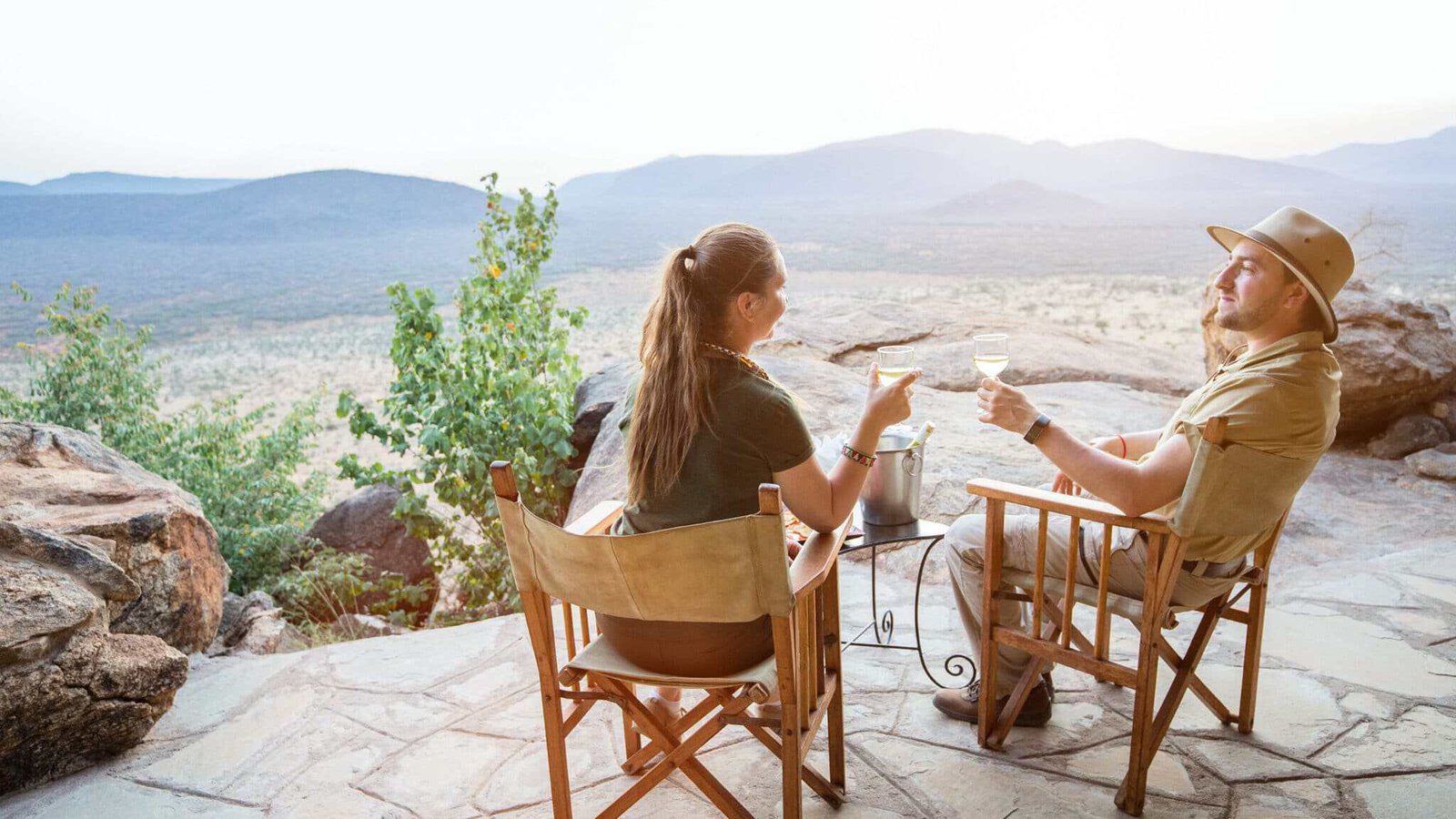
Experience the landscapes and wildlife of northern Kenya on this 4-day Meru National Park safari from Nairobi. The itinerary combines game drives, a visit to the park’s rhino sanctuary, Adamson’s Falls, riverine habitats and opportunities to observe Meru’s diverse wildlife.
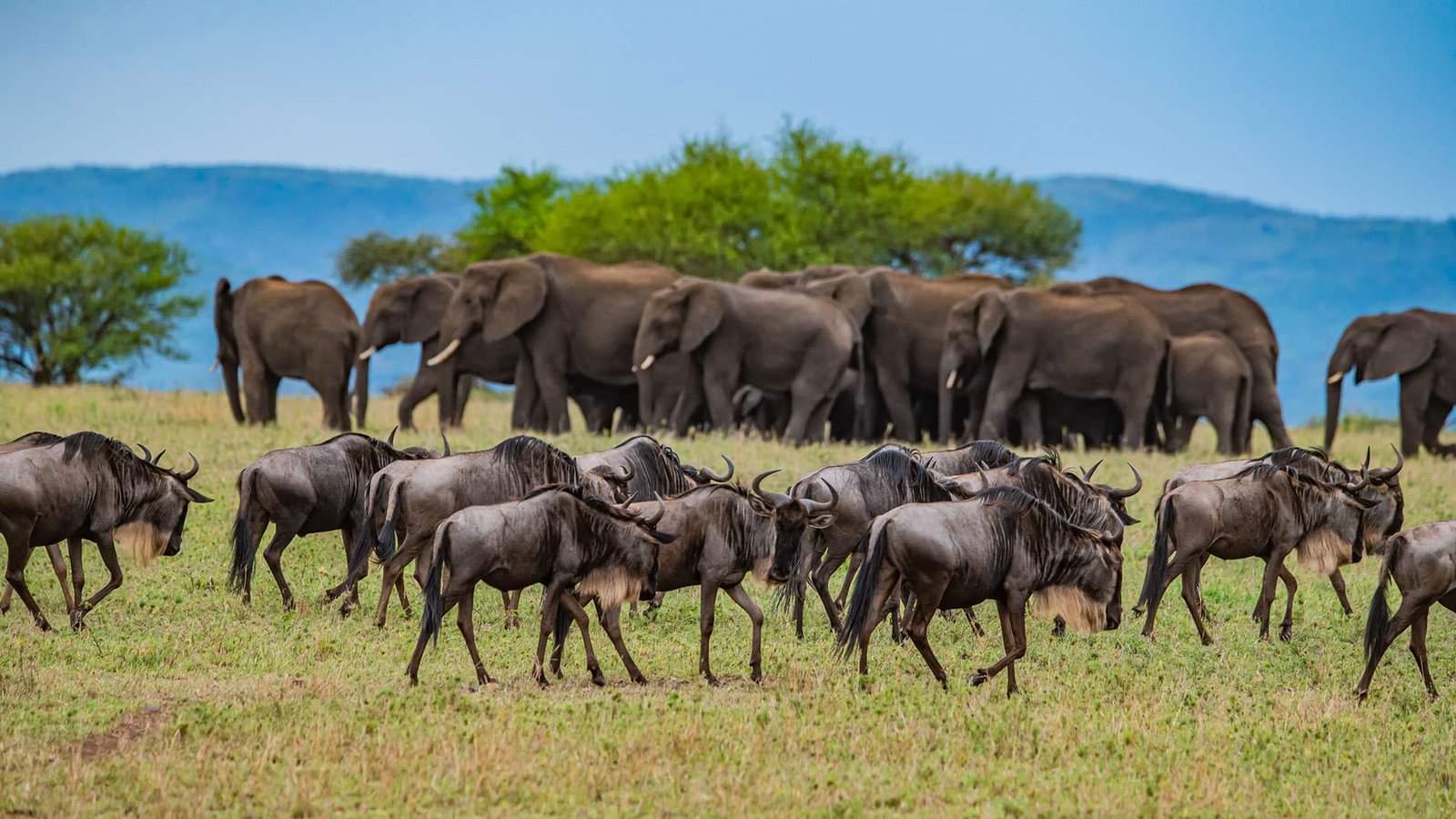
Meru National Park is particularly known for its network of permanent rivers, varied landscapes and conservation history. Depending on seasonal conditions and animal movements, you may encounter elephants, giraffes, buffaloes, zebras, hippos, rhinos and a variety of bird species.
The safari is designed to allow time for several game drives rather than rushing between destinations, giving you more opportunities to explore different habitats within the park.
Itinerary
Escape the city and discover the diverse landscapes and wildlife of northern Kenya on this 4-day Meru National Park safari from Nairobi. The journey combines scenic countryside, rewarding game drives, rhino conservation, riverine habitats and some of Meru’s most notable attractions, including Elsa’s Memorial and Adamson’s Falls.
Across three nights at Ikweta Safari Camp, you’ll explore different areas of the park in search of elephants, giraffes, buffaloes, zebras, hippos, rhinos and a variety of bird species. The itinerary also allows time to experience Meru’s rivers, grasslands and woodland habitats while learning about the park’s conservation history.
For travellers looking for Kenya safari tours with a balance of wildlife viewing, nature and cultural conservation stories, this itinerary provides four days to explore Meru National Park at a comfortable pace before returning to Nairobi.
Day 1
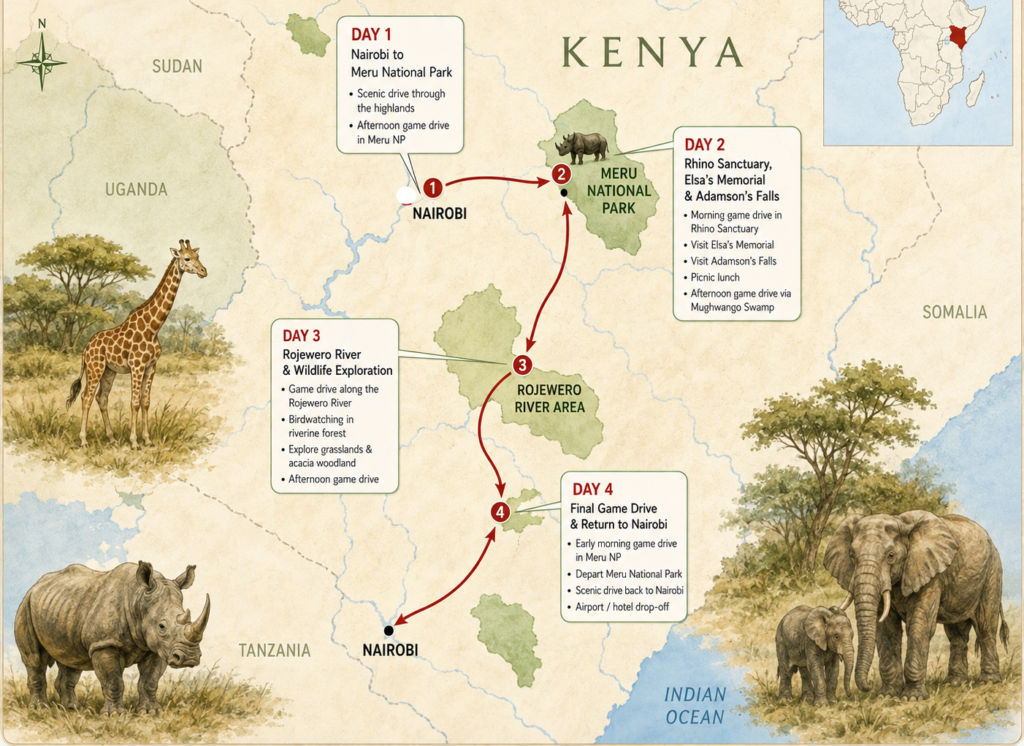
Nairobi – Meru National Park – Afternoon Game Drive
Depart Nairobi and travel towards Meru National Park. The journey takes you through changing landscapes, from the developed areas around Nairobi to the agricultural highlands and the countryside surrounding Mount Kenya.
As you continue north-east, the scenery gradually becomes more open and drier. The route provides an opportunity to see rural Kenya and communities along the way before reaching the Meru region.
Arrive at Meru National Park and check in at your accommodation. After lunch and some time to settle in, begin your first game drive.
Meru is characterised by open grasslands, acacia woodland and riverine habitats. Its permanent water sources provide important habitat for wildlife, particularly during drier periods.
During the afternoon drive, look for elephants, giraffes, buffaloes, zebras and other plains wildlife. Hippos may also be seen around suitable water habitats, while birdlife is especially noticeable around the rivers and wetlands.
Your exact wildlife sightings will depend on the season, weather and animal movements. Your guide will choose routes based on current conditions and recent sightings.
Return to camp in the evening for dinner and overnight accommodation.
Activities:
Accommodations:
- Gold Ikweta Safari Camp
Day 2
Rhino Sanctuary – Elsa’s Memorial – Adamson’s Falls
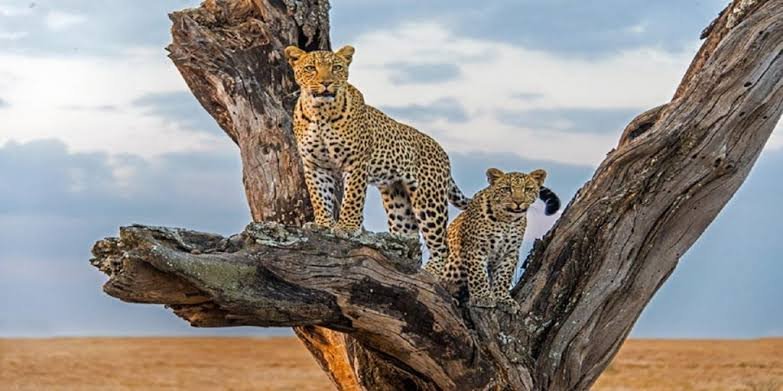
Begin the day with an early game drive, when temperatures are generally cooler and wildlife is often active.
The morning route includes the rhino sanctuary, where both black and white rhinos may be encountered. Your guide will follow designated roads and monitor recent wildlife activity to maximise the opportunity for sightings while maintaining appropriate viewing distances.
The sanctuary also provides an opportunity to learn about rhino conservation and the wider challenges facing Kenya’s threatened wildlife. Visit Elsa’s Memorial, associated with Elsa the lioness and the conservation story made internationally famous through Joy Adamson’s Born Free. The site offers an opportunity to learn about the history of wildlife conservation in Meru and the people associated with the park.
Continue towards Adamson’s Falls, located along the Tana River. The falls and surrounding riverine environment provide a scenic contrast to the park’s open plains.
Enjoy a packed picnic lunch in the designated area before continuing your exploration. Continue the game drive through areas such as Mughwango Swamp and surrounding habitats. Water-dependent wildlife can often be found around permanent or seasonal water sources.
Activities:
Accommodations:
- Gold Ikweta Safari Camp
Day 3
Rojewero River – Riverine Wildlife & Birdwatching
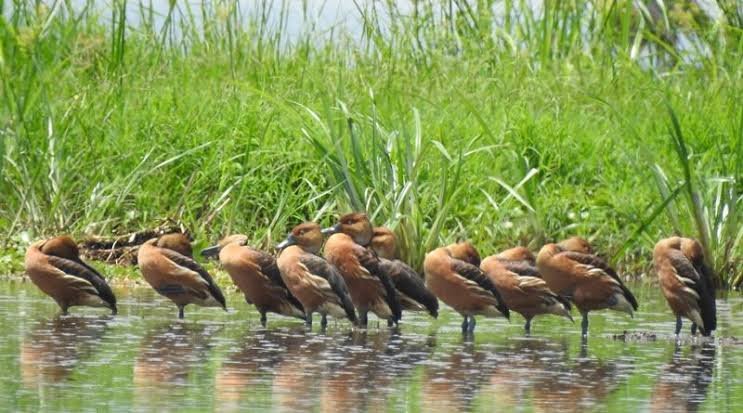
Set out on a game drive along the Rojewero River corridor. Exploring a different section of the park allows you to experience another combination of riverine vegetation, grasslands and woodland.
Meru’s permanent rivers and streams support a wide variety of wildlife and bird species. If you are interested in birdwatching, this is an excellent opportunity to spend more time observing species around the river and forest edges.
You may encounter hornbills, kingfishers and other water-associated and woodland birds. Keep an eye on the surrounding vegetation for larger wildlife as well.
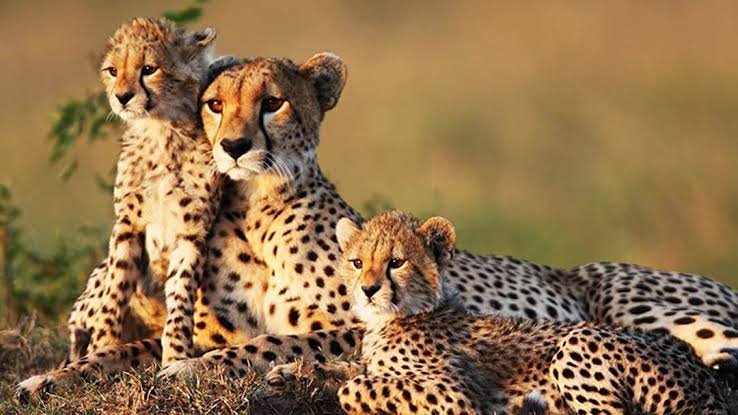
Meru supports a diverse range of mammals, and the park is known for species including elephants, buffaloes, giraffes, zebras, hippos, rhinos and several predators. Depending on the conditions, you may also have opportunities to look for cheetahs, lions, leopards, Grevy’s zebras and gerenuks.
Because wildlife sightings are naturally unpredictable, your guide will adapt the route according to current conditions and recent sightings rather than following a fixed wildlife checklist.
Activities:
Accommodations:
- Gold Ikweta Safari Camp
Day 4:
Final Game Drive – Meru National Park to Nairobi
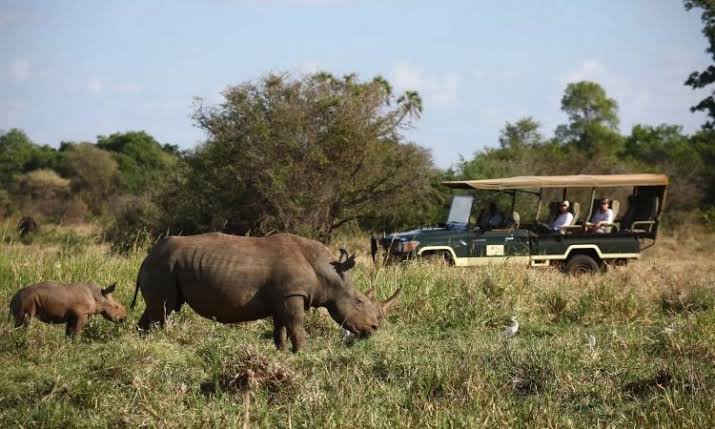
Enjoy your final game drive in Meru National Park.
An early departure gives you another opportunity to observe wildlife before the day’s temperatures rise. Depending on the morning’s conditions, you may encounter elephants, buffaloes, giraffes, zebras, rhinos or predators.
Rather than promising specific sightings, your guide will use knowledge of the park, recent wildlife activity and road conditions to select suitable areas for the final drive.
Take time to enjoy the landscape and photograph the scenery before returning to camp. Return to the camp for breakfast and check-out.
Begin the journey back to Nairobi. The drive provides a final opportunity to appreciate the changing landscapes between Meru and Kenya’s capital.