
Kenya is one of Africa’s leading bird-watching destinations, offering an exceptional combination of tropical forests, freshwater lakes, alkaline lakes, wetlands, mountains, coastal forests, mangroves, semi-arid landscapes and open savannahs. For travellers planning a bird-watching safari in Kenya in 2026, this diversity makes it possible to experience many different bird habitats within a single journey.
More than 1,000 bird species have been recorded in Kenya. These include resident species as well as migratory birds that arrive seasonally from Europe, Asia and other parts of Africa. The country’s location along important migration routes, combined with its wide variety of ecosystems, makes bird watching possible throughout the year.
One of the greatest advantages of bird watching in Kenya is the opportunity to combine birding with a traditional African wildlife safari. Destinations such as the Maasai Mara, Amboseli, Samburu and Lake Nakuru offer excellent birding alongside elephants, lions, rhinos, giraffes, buffaloes, leopards and many other animals.
Specialist birders can explore destinations such as Kakamega Forest and Arabuko-Sokoke Forest, while travellers interested in waterbirds can visit Lake Nakuru, Lake Naivasha, Lake Baringo and Mida Creek. The following are 10 of the best places to visit in Kenya for bird watching in 2026.
1. Lake Nakuru National Park
Lake Nakuru National Park is one of the best-known bird-watching destinations in Kenya. Located in the Great Rift Valley, the park surrounds Lake Nakuru and protects a diverse environment that includes alkaline lake habitat, grasslands, acacia woodland, rocky escarpments and forest.
Lake Nakuru became internationally famous for the large numbers of flamingos that historically gathered around its shoreline. Greater Flamingos and Lesser Flamingos can still occur at the lake, although their numbers naturally change depending on water levels, food availability and ecological conditions. Travellers planning a visit specifically to see flamingos should therefore understand that sightings and concentrations cannot be guaranteed.
The park offers much more than flamingos. Birdwatchers can search for Great White Pelicans, African Fish Eagles, African Spoonbills, Yellow-billed Storks, Marabou Storks, Sacred Ibises, Pied Kingfishers, Goliath Herons, cormorants, egrets and numerous wading birds.
Different habitats around the park provide opportunities to encounter woodland and grassland species as well. This makes Lake Nakuru suitable for visitors who want to spend an entire day birding rather than concentrating only on the shoreline.
Early morning game drives can be particularly productive. Birders can explore the lake edges before moving into woodland, grassland and rocky areas as the day progresses. Carrying binoculars and allowing enough time for frequent stops can make the experience considerably more rewarding.
Lake Nakuru is also ideal for travellers who want to combine bird watching with conventional wildlife viewing. The park is an important rhino habitat and also supports buffaloes, giraffes, zebras, antelopes, lions and other wildlife.
A stay of one or two nights is generally suitable for incorporating Lake Nakuru into a longer Kenya bird-watching safari.
2. Kakamega Forest
Kakamega Forest is one of the most important destinations for forest bird watching in Kenya. Located in western Kenya, the forest represents a very different environment from the open grasslands and dry savannahs that dominate many of the country’s famous safari destinations.
The forest is particularly important because of its connection to the wider Guineo-Congolian forest ecosystem of central and western Africa. As a result, Kakamega supports forest-associated birds that can be difficult to find elsewhere in Kenya.
The Great Blue Turaco is among the most memorable birds associated with Kakamega. Birdwatchers may also search for Blue-headed Bee-eaters, greenbuls, barbets, sunbirds, flycatchers, woodpeckers and numerous other forest species.
Birding in Kakamega is very different from birding in the Maasai Mara or Amboseli. Instead of scanning open plains from a safari vehicle, visitors often walk slowly along forest trails while listening carefully for bird calls and watching different levels of the vegetation.
Some species remain high in the canopy, while others prefer dense undergrowth. Patience is therefore essential. A bird may be heard several times before it becomes visible.
An experienced local birding guide can be particularly valuable in Kakamega Forest. Guides familiar with the area can recognise calls, locate productive sections of forest and identify species that visitors might otherwise overlook.
Early mornings are normally among the most rewarding periods because many forest birds become active and vocal shortly after sunrise. Spending two or three nights in the area allows enough time to explore different forest habitats rather than trying to see everything during a short visit.
For serious birdwatchers planning a Kenya birding safari in 2026, Kakamega Forest deserves a high position on the itinerary.
3. Arabuko-Sokoke Forest
Arabuko-Sokoke Forest is one of the most important coastal bird-watching destinations in Kenya. Situated near Watamu and Malindi, the forest protects a unique coastal ecosystem containing several birds with restricted geographical ranges.
The forest is particularly attractive to experienced birders searching for specialist species. Important targets can include the Sokoke Scops Owl, Clarke’s Weaver, Sokoke Pipit, Amani Sunbird, East Coast Akalat and other coastal forest birds.
The Sokoke Scops Owl is especially sought after because of its limited distribution and secretive behaviour. Finding specialist species such as this often requires considerable patience and the assistance of a knowledgeable local guide.
Birding inside Arabuko-Sokoke usually involves slow exploration. Some birds may remain deep within vegetation, while others can be detected more easily through their calls. Visitors should therefore allow enough time rather than treating the forest as a quick sightseeing stop.
The location of Arabuko-Sokoke also creates an opportunity to combine forest birding with coastal bird watching. Mida Creek is nearby and offers mangrove, tidal and mudflat habitats. Combining the two destinations allows visitors to experience completely different groups of birds within a relatively small geographical area.
Travellers can spend the morning searching for forest specialists before exploring coastal wetlands later in the day. This combination makes the Watamu region one of the strongest areas for specialist bird watching on Kenya’s coast.
A stay of two or three nights gives birdwatchers more time to explore Arabuko-Sokoke and nearby birding areas.
4. Lake Baringo
Lake Baringo is one of Kenya’s classic Rift Valley birding destinations. Its combination of freshwater habitat, dry bushland, rocky landscapes, cliffs, acacia vegetation and shoreline environments makes it particularly interesting for birdwatchers seeking variety.
Unlike the alkaline environment of Lake Nakuru, Lake Baringo is a freshwater lake. This ecological difference means the two destinations can complement each other extremely well when included in the same birding itinerary.
Birdwatchers around Lake Baringo can search for African Fish Eagles, Goliath Herons, kingfishers, bee-eaters, hornbills, weavers, storks and numerous other species. The surrounding dry landscapes also provide opportunities to search for birds adapted to semi-arid environments.
A boat excursion is one of the most enjoyable ways to experience bird watching at Lake Baringo. Travelling slowly across the water provides opportunities to observe birds around the shoreline and aquatic vegetation from a different perspective.
The surrounding rocky areas and cliffs can also be productive for raptors. Birders interested in birds of prey should allow enough time to explore habitats beyond the immediate shoreline.
Lake Baringo works particularly well as part of a Great Rift Valley birding circuit. A route combining Lake Naivasha, Lake Nakuru and Lake Baringo introduces travellers to several different lake environments and increases the range of habitats explored during the safari.
One or two nights at Lake Baringo can provide a rewarding addition to a longer Kenya bird-watching itinerary.
5. Maasai Mara National Reserve
The Maasai Mara National Reserve is internationally famous for lions, elephants, leopards, cheetahs and the Great Migration, but it is also one of Kenya’s most rewarding destinations for savannah bird watching.
The reserve contains open grasslands, seasonal wetlands, acacia woodland, riverine forest and rivers. This variety of habitats supports a large and diverse bird population.
Birdwatchers can search for Bateleurs, Tawny Eagles, Martial Eagles, vultures, Secretarybirds, Kori Bustards, hornbills, bee-eaters, storks, rollers and many other savannah species.
The Lilac-breasted Roller is one of the most recognisable birds encountered during Kenyan safaris. Its bright colours make it particularly popular with photographers, and it is frequently seen perched in open areas where it can watch for insects.
Raptors are another major attraction. The open landscapes make it possible to observe birds of prey soaring above the plains or perched in trees. Vultures are also an important part of the Mara ecosystem and can often be associated with predator activity and carcasses.
One of the greatest advantages of the Maasai Mara is that visitors do not have to choose between bird watching and traditional wildlife viewing. A single game drive can produce memorable bird sightings alongside lions, elephants, giraffes, cheetahs and other large mammals.
Travellers visiting during the Great Migration period may also experience the dramatic interaction between herbivores, predators and scavenging birds. However, excellent resident bird watching is possible outside the migration season as well.
A stay of two to four nights gives visitors enough time to explore different areas of the reserve and enjoy both wildlife and birding.
6. Amboseli National Park
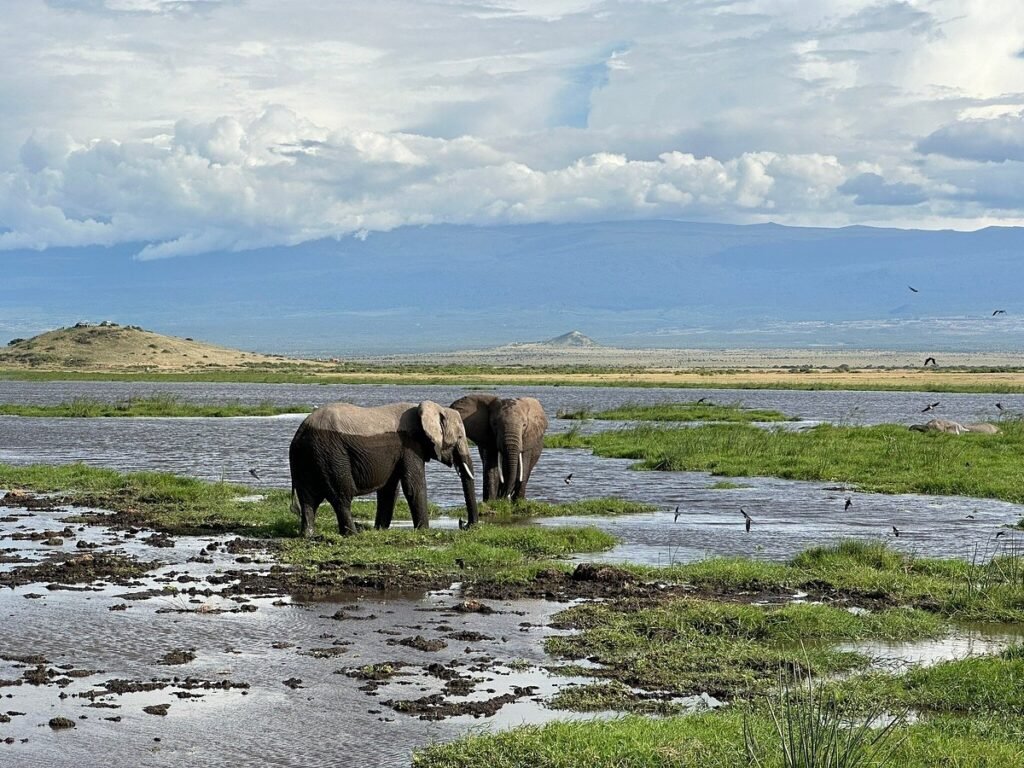
Amboseli National Park offers one of Kenya’s most scenic combinations of bird watching, wildlife and landscape photography. The park is famous for its elephants and views of Mount Kilimanjaro, but its wetlands and open plains also support impressive birdlife.
Amboseli contains permanent and seasonal marshes, grasslands, dry plains, woodland and other habitats. The wetlands are particularly important because underground water associated with the Kilimanjaro ecosystem helps sustain marsh environments even when surrounding areas are dry.
Birdwatchers can search for African Fish Eagles, African Spoonbills, pelicans, herons, egrets, kingfishers, storks and other wetland birds. Flamingos may also occur when local conditions are suitable.
Moving away from the wetlands introduces birders to species associated with open savannah. Secretarybirds, bustards, ostriches and different raptors can be observed across the plains.
Amboseli is particularly attractive for bird photographers. The combination of open landscapes, wetlands, wildlife and Mount Kilimanjaro can provide exceptional photographic opportunities when visibility and weather conditions cooperate.
Early morning can be especially rewarding because temperatures are cooler, birds are active and Kilimanjaro is sometimes clearer before clouds develop later in the day.
A stay of two or three nights allows travellers to explore both wetland and dry savannah habitats.
7. Mida Creek
Mida Creek is one of the best destinations on the Kenyan coast for birdwatchers interested in shorebirds, waterbirds and migratory species.
Located near Watamu, the creek contains mangrove forests, tidal channels, mudflats and shallow coastal waters. These habitats provide feeding and resting areas for resident and migratory birds.
During migration periods, birders may encounter sandpipers, plovers, whimbrels, terns and other species that have travelled considerable distances between their breeding and wintering areas.
Tidal conditions can strongly influence birding at Mida Creek. As water levels change, birds move between feeding and resting areas. Travelling with someone familiar with local tides and bird movements can therefore improve the experience.
The mangroves introduce another important habitat. Kingfishers, herons, egrets and other species may be observed around the channels and vegetation.
Mida Creek becomes even more rewarding when combined with nearby Arabuko-Sokoke Forest. The forest provides opportunities to search for coastal forest specialists, while the creek introduces shorebirds and wetland species.
For travellers planning a specialist Kenya bird-watching holiday in 2026, spending several days around Watamu can therefore provide excellent habitat diversity without requiring long transfers between birding locations.
8. Samburu National Reserve
Samburu National Reserve is one of the best destinations for bird watching in northern Kenya. Its semi-arid environment creates a strong contrast with the forests, lakes and wetlands found elsewhere in the country.
The landscape includes dry savannah, acacia woodland, rocky terrain and riverine vegetation associated with the Ewaso Nyiro River. These habitats support numerous species adapted to northern Kenya’s relatively dry climate.
The Vulturine Guineafowl is one of the most distinctive birds visitors may encounter. Its striking blue coloration and unusual appearance make it a favourite among bird photographers.
The Somali Ostrich is another important northern species. Birdwatchers can also search for White-bellied Bustards, Secretarybirds, hornbills, bee-eaters, starlings, rollers, sunbirds and numerous raptors.
The Ewaso Nyiro River creates a productive wildlife corridor through an otherwise dry environment. Riverine vegetation attracts birds as well as elephants and other animals, making areas around the river particularly interesting for safari drives.
Samburu also gives visitors an opportunity to combine specialist birding with northern Kenya wildlife. Species such as Grevy’s zebra, reticulated giraffe and gerenuk add another dimension to the safari.
Two to four nights are recommended for travellers who want enough time to explore Samburu and the surrounding ecosystem.
9. Lake Naivasha
Lake Naivasha is one of the most accessible bird-watching destinations in the Great Rift Valley and is particularly convenient for travellers beginning or ending a safari in Nairobi.
Unlike several alkaline lakes in the Rift Valley, Lake Naivasha is a freshwater lake. Its shoreline vegetation, wetlands, acacia woodland and surrounding grasslands create suitable habitats for numerous birds.
The African Fish Eagle is one of the lake’s most iconic species. Visitors may hear its distinctive call before seeing the bird perched in a tree overlooking the water.
Other birds can include African Jacanas, Pied Kingfishers, Giant Kingfishers, pelicans, cormorants, herons, egrets, grebes, weavers and various smaller species.
A boat excursion is one of the most popular ways to experience bird watching at Lake Naivasha. Travelling slowly across the lake provides opportunities to observe waterbirds and explore different sections of the shoreline.
Birders can also explore terrestrial habitats around the lake. Acacia woodland and nearby grasslands support species that may not be encountered during a boat trip.
Lake Naivasha can easily be combined with Lake Nakuru, making the two destinations an excellent introduction to Rift Valley birding.
A stay of one or two nights is normally suitable, although dedicated birdwatchers may choose to spend longer exploring the surrounding area.
10. Mount Kenya
Mount Kenya provides an entirely different bird-watching environment from Kenya’s savannah parks and Rift Valley lakes. The mountain and surrounding forests offer opportunities to search for highland, montane and forest species.
One of the most interesting features of Mount Kenya is the way habitats change with elevation. Lower woodland gives way to montane forest and progressively higher-altitude vegetation.
Each zone supports different species, allowing birders to experience several ecological environments while exploring the mountain region.
Birdwatchers may encounter turacos, sunbirds, barbets, woodpeckers, flycatchers, raptors and various forest species. The surrounding highland environment can be particularly rewarding for travellers interested in birds that are less commonly encountered in Kenya’s lowland safari destinations.
Birding around Mount Kenya generally requires a slower approach. Walking through suitable forest areas, listening for calls and observing the canopy can be more productive than attempting to cover large distances quickly.
Mount Kenya can also form part of an excellent central and northern Kenya itinerary. Travellers can combine the area with Nanyuki, Ol Pejeta Conservancy and Samburu National Reserve.
Spending two or three nights in the Mount Kenya region gives visitors enough time to explore different habitats while also enjoying the mountain scenery.
Best Time for Bird Watching in Kenya in 2026
Kenya offers rewarding bird watching throughout the year. However, the ideal travel period depends on whether the visitor is primarily interested in resident species, migratory birds, breeding behaviour, wildlife viewing or photography.
The period from approximately November to April can be especially rewarding for birdwatchers interested in migratory species. Palearctic migrants from Europe and Asia add to Kenya’s already impressive resident bird diversity during parts of this period.
Wetlands, lakes and coastal habitats can be particularly productive for migratory birds. Mida Creek is an important destination to consider during this period, while the Rift Valley lakes can also provide interesting sightings.
Rainy periods can create excellent birding conditions because vegetation becomes greener and insect activity increases. Many species may also become more active around breeding periods. The trade-off is that heavy rain can sometimes affect road conditions, particularly in remote areas.
The drier months are particularly attractive for travellers combining bird watching with a conventional wildlife safari. Vegetation can become less dense in some areas, and animals frequently concentrate around reliable water sources.
There is therefore no single month that is perfect for every birdwatcher. The best time should be chosen according to the species, habitats and wider safari experiences the traveller wants to prioritise.
How to Plan a Bird-Watching Safari in Kenya
A specialist bird-watching safari should be planned differently from a standard wildlife itinerary. Conventional game drives sometimes focus on covering large areas while searching for lions, elephants and other large mammals. Birding generally benefits from slower travel, frequent stops and more time within each habitat.
Early morning departures are particularly valuable. Many birds become active shortly after sunrise when temperatures are cooler. Forest species may also be easier to locate by listening for their calls during this period.
An experienced birding guide can significantly improve a safari. Skilled guides recognise calls, behaviour, preferred habitats and subtle identification characteristics that can be difficult for visitors to notice.
Binoculars are essential equipment for most birding safaris. A field guide or reliable bird identification application can also help visitors confirm sightings and maintain a record of species encountered.
Photographers should consider carrying a suitable telephoto lens, extra batteries and sufficient storage. However, photography should always be conducted without disturbing birds or interfering with their natural behaviour.
Travellers should also avoid making the itinerary too rushed. Spending two or three nights in important destinations often produces a more satisfying experience than visiting many parks for only a few hours each.
Responsible Bird Watching in Kenya
Responsible bird watching is essential for protecting Kenya’s birdlife and the habitats on which birds depend. Visitors should maintain a respectful distance from wildlife and avoid disturbing nesting, feeding or resting birds.
Birders should be particularly careful around nests and breeding areas. Approaching too closely for photographs can cause unnecessary stress and may interfere with normal breeding behaviour.
Excessive use of recorded bird calls should also be avoided. Although recordings can sometimes help locate difficult species, repeated playback can disrupt territorial or breeding behaviour.
Visitors should follow the instructions of local guides, conservancy staff and wildlife authorities. Remaining on designated roads and trails where required helps protect sensitive habitats.
Responsible tourism can also contribute to conservation by supporting trained local birding guides, community conservancies and tourism businesses that depend on healthy ecosystems.
Kenya’s forests, wetlands, coastal environments and savannahs are not only tourism attractions. They are functioning ecosystems that support resident wildlife and migratory species. Protecting these habitats is essential for maintaining Kenya’s long-term position as an important African birding destination.
Best Kenya Bird-Watching Safari Routes for 2026
7-Day Rift Valley Birding Safari
A seven-day birding itinerary can begin in Nairobi before travelling to Lake Naivasha, Lake Nakuru and Lake Baringo before returning to Nairobi.
The route introduces travellers to freshwater lake habitat, alkaline lake environments, wetlands, woodland and dry-country ecosystems. It is particularly suitable for visitors who have limited time but want to experience several different bird habitats.
10-Day Kenya Bird-Watching Safari
A more comprehensive itinerary can travel from Nairobi to Lake Naivasha, Lake Nakuru, Lake Baringo and Kakamega Forest before returning to Nairobi.
Adding Kakamega Forest significantly changes the birding experience because visitors move from Rift Valley lakes and dry landscapes into tropical forest habitat. This can greatly increase the variety of species encountered during the journey.
14-Day Kenya Birding and Wildlife Safari
Travellers who want to combine specialist birding with traditional wildlife viewing can follow a route from Nairobi through Lake Naivasha, Lake Nakuru, Lake Baringo, Samburu, Mount Kenya and the Maasai Mara before returning to Nairobi.
This route provides freshwater wetlands, Rift Valley environments, semi-arid northern landscapes, mountain forest and open savannah. It also offers opportunities to see elephants, rhinos, lions, giraffes, leopards and numerous other mammals.
14-Day Coastal Kenya Birding Safari
A coastal-focused itinerary can travel from Nairobi through Tsavo and the Taita Hills before continuing to Arabuko-Sokoke Forest, Mida Creek and Watamu.
This route is particularly suitable for specialist birdwatchers because it combines savannah, coastal forest, mangroves and tidal wetlands. Travellers can search for forest specialists at Arabuko-Sokoke before concentrating on shorebirds and migratory species around Mida Creek.
Why Kenya Is One of Africa’s Best Bird-Watching Destinations
Kenya’s greatest advantage as a birding destination is habitat diversity. Tropical forests, freshwater lakes, alkaline lakes, wetlands, mangrove ecosystems, highland forests, mountains, grasslands, dry savannah and semi-arid environments can all be experienced within the country.
Each ecosystem supports different bird communities. A traveller concentrating entirely on famous safari parks may therefore see many birds but still miss some of Kenya’s most interesting specialist species.
A better approach is to design a safari around different habitats. Lake Naivasha and Lake Nakuru introduce wetland and lake species. Kakamega provides tropical forest birding. Samburu introduces northern dry-country species. Mount Kenya provides highland habitats, while the Maasai Mara offers classic savannah birding.
The Kenyan coast adds another dimension. Arabuko-Sokoke Forest provides opportunities for rare coastal forest birds, while Mida Creek is particularly valuable for shorebirds and seasonal migrants.
Kenya is also suitable for travellers who are not dedicated birders. Couples, families and small groups can combine bird watching with traditional safari activities, cultural experiences, photography, walking, boat excursions and beach holidays.
This flexibility makes Kenya suitable for first-time birdwatchers, professional photographers, experienced birders and travellers who simply want to appreciate the country’s natural diversity.
Final Thoughts
The best places to visit in Kenya for bird watching in 2026 extend far beyond the country’s most famous national parks. Kenya’s birding strength comes from the remarkable variety of ecosystems found within relatively accessible regions of the country.
Lake Nakuru is an excellent choice for waterbirds and a traditional wildlife safari. Kakamega Forest should be considered by travellers interested in tropical forest species, while Arabuko-Sokoke is particularly important for specialist coastal forest birding.
Lake Baringo provides freshwater and dry-country birding, while the Maasai Mara combines savannah species and raptors with some of Africa’s most famous wildlife. Amboseli adds productive wetlands and spectacular Mount Kilimanjaro scenery.
Mida Creek is particularly valuable for coastal and migratory birds, Samburu introduces the distinctive species of northern Kenya, Lake Naivasha provides accessible freshwater birding, and Mount Kenya completes the experience with highland and montane habitats.
For travellers who want the most rewarding Kenya bird-watching safari, the key is not simply to visit as many parks as possible. A stronger itinerary combines different habitats and allows enough time in each destination for careful observation.
Whether you are searching for flamingos around Rift Valley lakes, forest birds beneath the canopy, raptors soaring over the Maasai Mara, northern specialties in Samburu or migratory shorebirds along the Kenyan coast, a carefully planned bird-watching safari in Kenya in 2026 can provide one of East Africa’s most diverse wildlife experiences.