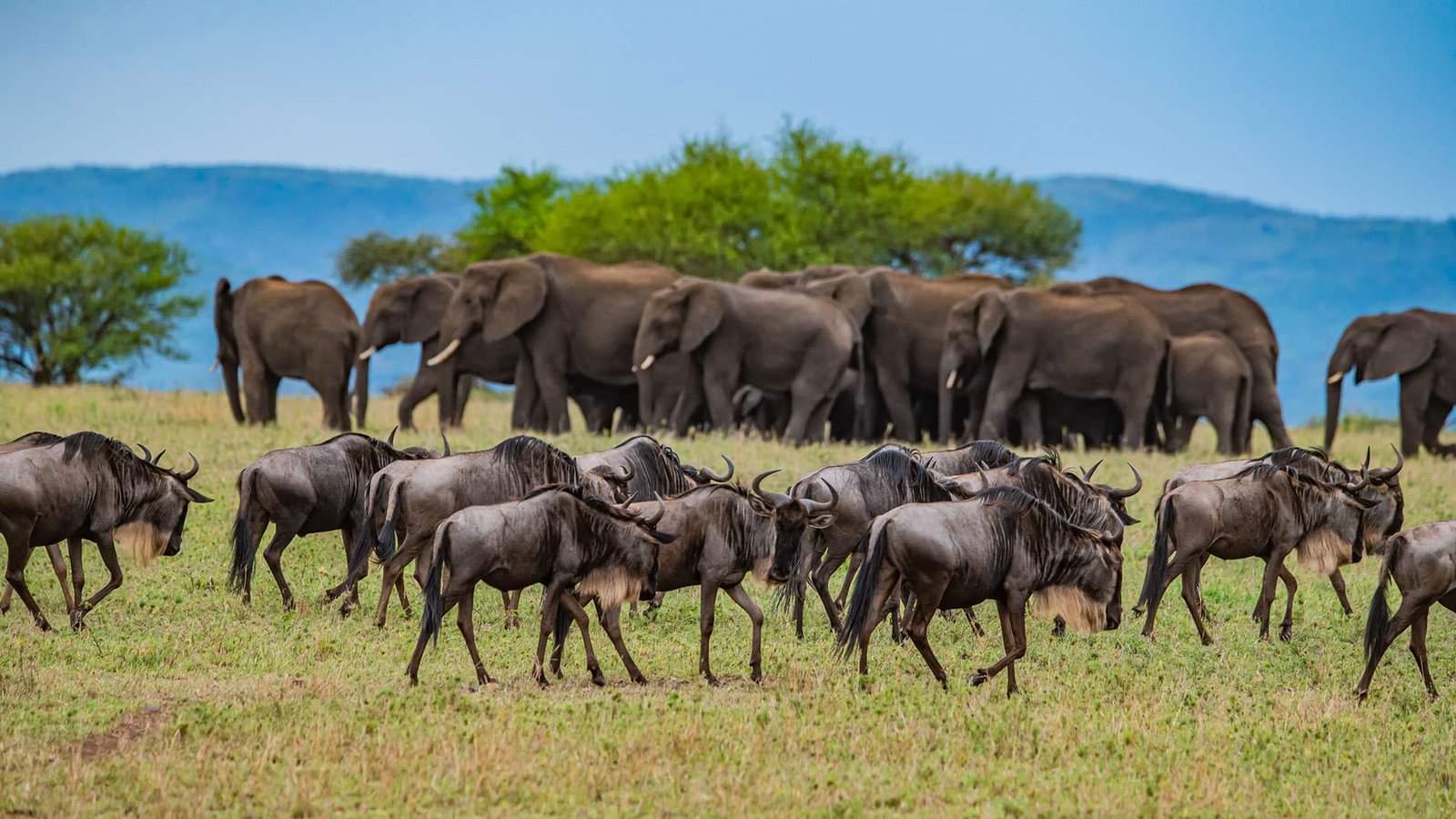
Going to the bathroom is one of the most common practical concerns for first-time safari travellers, especially when they imagine spending several hours in the middle of a national park with no buildings nearby. The reality is that safari operators are accustomed to handling this need, and your guide should explain the arrangements before a game drive begins. The main difference is between using a proper toilet at your lodge, camp, gate or designated picnic area and taking a short bush bathroom break when you are far from established facilities.
How you use the bathroom on safari depends on where you are at the time. At your safari lodge, hotel or tented camp, you will normally have access to a conventional bathroom. Many permanent lodges and tented camps have private en-suite bathrooms, while some campsites and budget properties may provide shared bathroom facilities. Kenya Wildlife Service also lists campsites with toilet and bathroom facilities in some protected areas.
During a game drive, however, you may be several kilometres from the nearest building or formal toilet. In that situation, you should tell your safari guide that you need a bathroom break rather than waiting until the situation becomes urgent. Experienced guides understand that guests need regular breaks and can look for a suitable designated or reasonably safe stopping location depending on the area, park rules and conditions.
In some safari areas, a bush toilet may be used when there is no formal toilet nearby. This generally means the guide selects an appropriate location where the vehicle can stop safely and where the guest can have some privacy. Your guide should first assess the surroundings because you are in a wildlife habitat. You should never simply walk away from the vehicle on your own. Safari guidance commonly recommends that guests ask the guide before leaving the vehicle because wildlife can be nearby even when it is not immediately visible.
A bush bathroom break is usually much simpler than first-time safari visitors expect. Your guide may position the vehicle to provide privacy and identify a suitable place behind natural cover such as bushes or a termite mound. Toilet paper and hand sanitiser are useful to carry, and any used toilet paper or other waste should be handled according to your guide’s instructions and never left scattered in the environment.
The important rule is that you should never treat the bush like an ordinary public toilet. Do not walk away from the safari vehicle without permission, do not approach animals to find privacy, and do not leave rubbish behind. Kenya Wildlife Service emphasizes that visitors are in wildlife habitat, should remain in vehicles except in designated areas, and should carry out their waste.
How do you go to the bathroom while on safari?
The easiest way to manage bathroom needs while on safari is to use the toilet before leaving your accommodation. This is particularly helpful when you are preparing for an early-morning game drive or a longer full-day Kenya safari tour. Many safari vehicles spend several hours moving through areas where formal toilet facilities are limited, so starting the drive after using the bathroom can make the experience more comfortable.
During the drive, tell your guide as soon as you feel that you need a bathroom break. There is no reason to feel embarrassed. Guides regularly travel with families, older travellers, children and people with different comfort requirements, so bathroom requests are a normal part of safari operations.
If a formal toilet is available nearby, your guide can take you there. Depending on the park and route, facilities may be found at entrance gates, picnic sites, visitor areas or other designated locations. Some Kenyan parks provide visitor facilities, although the availability and standard can vary considerably between destinations. Kenya Wildlife Service confirms that different parks and reserves have different accommodation and visitor facilities, so travellers should not assume that every game-drive route has a toilet.
If there is no formal toilet nearby, the guide will determine whether a safe bush stop is possible. This is one reason choosing an experienced safari driver-guide is important. A knowledgeable guide understands the terrain, animal behaviour and park rules and can make a safer decision about where and when passengers can leave the vehicle.
For longer game drives, it is sensible to carry a small personal bathroom kit. Toilet paper, tissues, hand sanitiser and a small personal waste bag can be useful. Women may also wish to carry any personal hygiene products they normally require. The goal is to be prepared without carrying unnecessary items.
What happens when you need to use the bathroom during a game drive?
If you need to use the bathroom during a game drive, simply inform your driver-guide. You do not need to wait until the scheduled end of the game drive. The guide will consider the location, wildlife activity, road conditions and availability of nearby facilities before deciding where to stop.
If you are near a picnic site, park facility or other designated visitor area, the guide may drive there so you can use a proper toilet. Formal facilities are preferable whenever they are conveniently available because they provide better hygiene, privacy and waste management.
If you are far from a facility, the guide may identify a suitable bush-break location. The exact procedure can differ between parks, conservancies and safari companies, so it is best to follow your guide’s instructions rather than assuming that every safari operates in exactly the same way.
Safety is more important than convenience during a bush bathroom stop. You should never walk into tall grass, behind a distant bush or around a rocky area by yourself. Predators, elephants, buffalo, hippos and other wildlife can be difficult to see, particularly in dense vegetation. Kenya Wildlife Service advises visitors to remain in their vehicles except in designated areas and to respect wildlife and its right of way.
Your guide may therefore ask you to remain close to the vehicle or may choose a location where visibility is good. Do not be surprised if the guide takes a few moments to inspect the area before allowing you to get out. This is a normal safety precaution, not an unnecessary delay.
You should also avoid taking unnecessary food or personal belongings with you during a bathroom stop. Keep your valuables secure in the vehicle and listen carefully to the guide’s instructions. Once you have finished, return to the vehicle promptly so the game drive can continue.
If you are travelling with children, tell the guide before the child becomes desperate. Children may find it difficult to wait several hours between toilet stops, so planning bathroom breaks before departure and communicating early with the guide can make a family safari considerably easier.
Are there toilets available during a Kenya safari?
Yes, toilets are available during many Kenya safaris, but you should not expect a permanent toilet at every point of a game-drive route. The availability of facilities depends on the national park, conservancy, campsite, lodge, picnic area and particular route being used.
Most lodges and permanent tented camps provide bathroom facilities for guests. The standard varies according to the accommodation category. Luxury safari camps commonly provide private en-suite bathrooms, while budget campsites and some basic facilities may have shared bathrooms. Kenya Wildlife Service confirms that accommodation in its parks and reserves ranges from luxury lodges and tented camps to public and special campsites, with facilities varying according to the type of accommodation.
Formal toilets may also be available at some park entrances and designated picnic areas. These facilities are particularly useful during longer drives when the guide plans a meal or rest stop. However, facilities are not necessarily available at every picnic location or along every game-drive track, so it is better to ask your guide about the planned stops at the beginning of the day.
The Masai Mara is a good example of why travellers should plan ahead. The open plains have large areas without permanent toilet buildings, while facilities can be found at certain gates and designated stopping areas. On a long game drive, your guide may therefore need to plan a bathroom stop rather than simply pulling over beside the nearest road.
The same principle applies to other Kenyan tour destinations such as Amboseli, Tsavo, Samburu, Lake Nakuru and Ol Pejeta. Each destination has its own combination of park facilities, lodges, campsites, picnic areas and operating rules. You should therefore avoid assuming that a toilet will always be within a few minutes of your vehicle.
Do safari vehicles have toilets?
Most standard safari vehicles used for Kenya game drives do not have built-in toilets. Safari vehicles are generally designed around wildlife viewing, passenger comfort, visibility and access to rough terrain rather than onboard bathroom facilities.
This means you should use the bathroom before setting out and communicate with your driver if you need a break. Some specialized safari arrangements may offer different facilities, but this should be confirmed with your tour operator before booking if having an onboard toilet is important to you.
Travellers who have a medical condition, mobility requirement or other reason for needing frequent toilet access should discuss this with their safari company before travelling. A suitable itinerary can often be planned around shorter drives, accommodation with private bathrooms and regular stops.
How long can you go without a bathroom on safari?
There is no fixed amount of time that every traveller should expect to go without a bathroom. Game drives can vary from short morning or afternoon outings to full-day drives lasting many hours. The distance from formal facilities also depends on the park and the route selected by your guide.
A practical approach is to use the bathroom before every game drive, especially before a long excursion. If you know that you will need a break during the drive, tell your guide at the beginning rather than waiting until it becomes urgent.
Your guide can then take your needs into account when planning the route. This is particularly important for families travelling with young children, older travellers and anyone who needs more frequent bathroom access.
Is it safe to use a bush toilet during a Kenya safari?
A bush bathroom break can be safe when it is handled correctly, but it should never be treated casually. The main danger is not the bathroom itself but the possibility of encountering wildlife when you leave the vehicle.
Kenya’s national parks have strict safety principles designed to keep visitors and wildlife safe. Kenya Wildlife Service advises visitors to remain inside vehicles except in designated areas and to avoid disturbing animals. It also emphasizes moving quietly, respecting wildlife and staying on established roads and trails.
For this reason, never decide to stop and use the bathroom independently. Always ask your driver-guide first. If the guide says it is not safe to leave the vehicle, wait until a suitable location becomes available.
What should you carry for bathroom breaks on safari?
A small personal bathroom kit can make safari travel much more comfortable. Toilet paper or tissues are among the most useful items because basic facilities may not always be fully stocked. Hand sanitiser is also practical, particularly when there is no convenient place to wash your hands immediately after a bush stop.
Women should consider carrying personal hygiene products that may be needed during the day. A small pack of wet wipes can also be useful, although travellers should follow the safari operator’s waste-management instructions and never throw wipes or other products into the environment.
It is also wise to carry drinking water. Kenya Wildlife Service recommends visitors carry clean drinking water in its park visitor guidance.
Can you ask your safari guide to stop for a toilet break?
Yes. You should feel comfortable telling your safari guide when you need a bathroom break. A professional driver-guide understands that guest comfort is an important part of the safari experience.
The best approach is to communicate early. Saying that you may need a bathroom stop gives your guide more options than waiting until you are in an isolated section of the park. The guide can then consider the nearest suitable facility or safe stopping point without unnecessarily disrupting the game drive.
A good safari guide will also explain the rules for leaving the vehicle. Follow those instructions carefully because the safety of guests and wildlife must come before convenience.
What if you need the bathroom urgently?
If you have an urgent need, tell your driver-guide immediately. Do not try to hold on for an extended period simply because you are worried about interrupting the game drive. Your guide can assess the situation and find the safest available solution.
If a formal toilet is close, the guide may head there. If you are far from any facility, the guide will determine whether a safe bush stop is possible. In either situation, remain calm and follow the guide’s instructions.
For travellers who know they may have urgent or frequent bathroom needs, it is best to inform the safari company before the trip. This allows the itinerary and accommodation choices to be planned around your needs rather than trying to solve the issue after entering a remote wildlife area.
Do luxury Kenya safaris have better bathroom facilities?
Luxury Kenya safaris generally provide a higher level of bathroom comfort at the accommodation. Many luxury lodges and tented camps offer private en-suite bathrooms, and some high-end camps provide spacious bathroom areas with modern fixtures and additional amenities.
However, luxury accommodation does not mean that a toilet will be available in the middle of every game drive. Once you leave camp and enter the wilderness, bathroom facilities can still be limited. The difference is that luxury safari operators often place greater emphasis on planning, comfort and guest service.
If bathroom comfort is particularly important to you, ask about the exact accommodation and game-drive arrangements before booking. A safari company should be able to explain what bathroom facilities are provided at the lodge or camp and how toilet breaks are handled during game drives.
Final advice about bathrooms on a Kenya safari
Bathroom concerns should not stop you from enjoying a Kenya safari. The key is to understand that safari travel combines comfortable accommodation with periods spent in remote wildlife areas. You will normally have proper bathroom facilities at your lodge or camp, while game drives require more planning because formal toilets are not available everywhere.
Use the bathroom before leaving camp, carry basic personal supplies, tell your guide when you need a break and never leave the vehicle without permission. Most importantly, remember that you are travelling through a natural wildlife environment. Kenya Wildlife Service’s safety guidance emphasizes staying in vehicles except in designated areas and respecting wildlife, which should always take priority during a bathroom stop.
With these simple precautions, bathroom arrangements are usually easy to manage, even on long Kenya safari game drives. For first-time visitors, the experience may feel unfamiliar at first, but your driver-guide is there to help you understand the practical side of safari travel and ensure that your game-viewing experience remains comfortable, safe and respectful of Kenya’s wildlife.
Create Kenya Safari Tours & Tanzania Safaris You've Always Imagined
Begin Your Safari Journey Today
Let's Turn Your Dream African Safari Into Reality

Let's Plan Your Kenya Safari Tours & Tanzania Safaris!
Let our experienced safari specialists guide your journey.
USA: +254 72210-3340 other countries