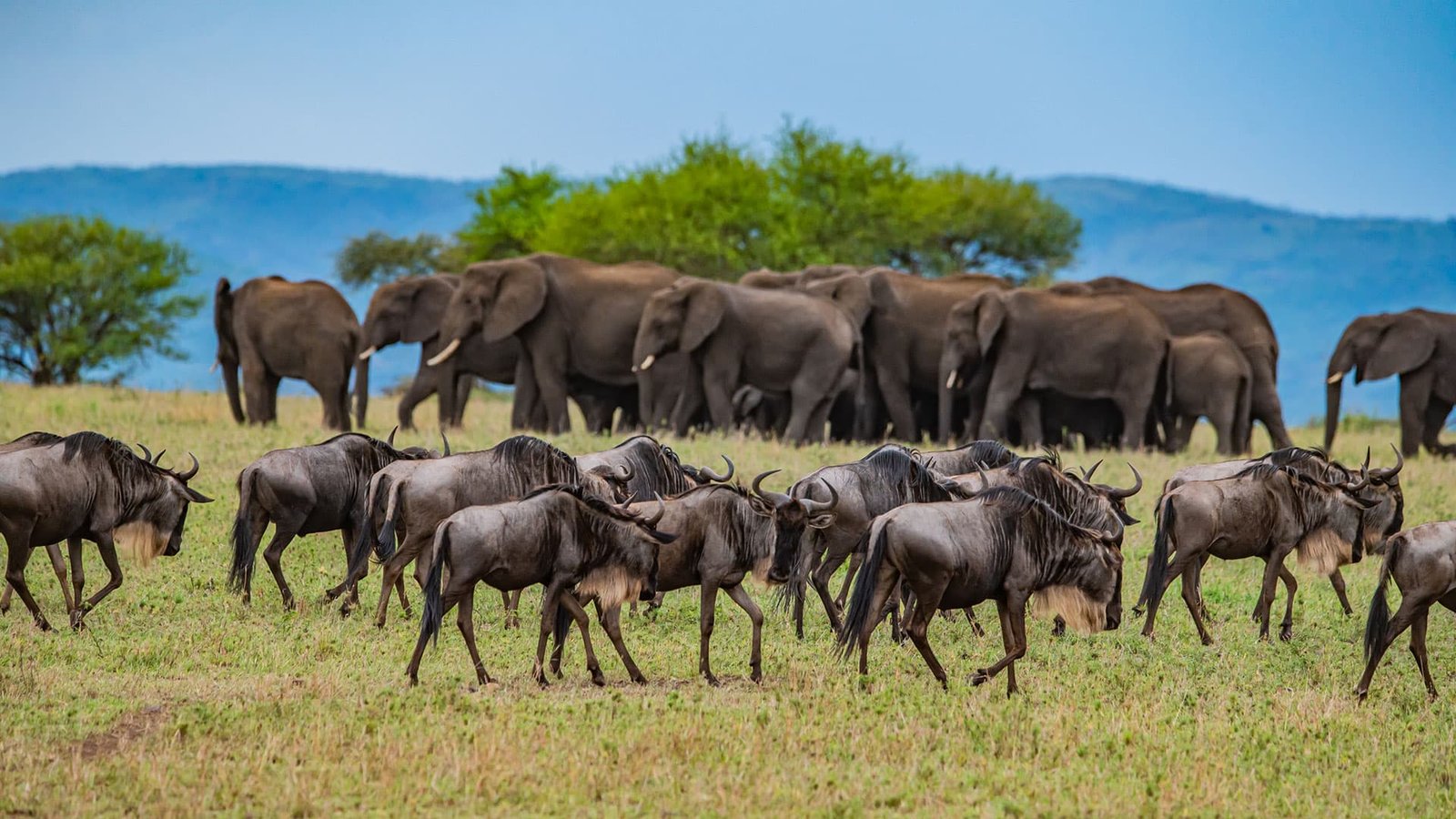
Hi everyone, first time poster here looking for advice on a first time safari. I would appreciate any views on the attached itinerary. It is an itinerary proposed for January 2027.For context, it will be mine and my wife’s first safari and we are basically treating it as our honeymoon so we want to make it the trip of a lifetime.How does it seem to you guys? Would you add time anywhere, shorten time anywhere?Also, we are thinking of going with Ndutu Green Explorers so would appreciate any reviews / opinions on that company.Thank you so much!
First of all, congratulations on your upcoming honeymoon! Tanzania is an incredible destination for a first safari, and January is a particularly interesting time to visit because of the Great Wildebeest Migration in the southern Serengeti ecosystem.
Greetings from Ravina Tours and Travels! Looking at your proposed itinerary, I think you have chosen some wonderful destinations, and there is certainly the potential for an unforgettable safari. However, since this is your first safari and you are treating it as a once-in-a-lifetime honeymoon, I would recommend making a few adjustments to give yourselves more time to enjoy the wildlife and accommodation without feeling rushed.
The biggest concern I have with your itinerary is not the choice of destinations but the number of accommodation changes and the amount of driving involved.
1. Your Current Safari Itinerary
From the itinerary you shared, your safari is arranged as follows:
| Day | Destination | Accommodation |
|---|---|---|
| Day 1 | Tarangire National Park | Manyara Best View Lodge |
| Days 2–3 | Central Serengeti | Serengeti Sound of Silence |
| Day 4 | Central Serengeti | Mbuni Serengeti Camp |
| Day 5 | Ndutu | Mbuni Migration Camp |
| Day 6 | Ngorongoro Crater | Manyara Best View Lodge |
| Day 7 | Lake Manyara area | Serval Wildlife Lodge |
One important detail is that your itinerary shows seven accommodation nights if you sleep at Serval Wildlife Lodge on Day 7. That would make it an eight-day, seven-night safari, rather than seven days and six nights. I would clarify this with the tour operator, especially because the final day lists breakfast and lunch but not dinner.
2. January Is an Excellent Time to Visit Ndutu
If I were planning this safari specifically for January, I would give serious consideration to spending more time in Ndutu.
During January, the Great Wildebeest Migration is often concentrated in the southern Serengeti and Ndutu ecosystem, although the exact location of the herds depends on seasonal rainfall.
This is also the period leading into the main wildebeest calving season, which generally takes place between January and March, with February often being particularly productive.
The arrival of large wildebeest herds can attract predators such as lions, cheetahs, hyenas, and occasionally leopards. This makes the region particularly rewarding for wildlife enthusiasts and photographers.
Your current itinerary includes only one night in Ndutu, which I think is rather short for January.
Remember that one night does not necessarily mean one full day of game drives. You may arrive from Central Serengeti during the afternoon and leave the following morning for Ngorongoro. That gives you only a limited window to explore the area.
For a January safari, I would personally recommend at least two nights in Ndutu, and preferably three if your budget and travel dates allow.
3. Three Nights in Central Serengeti Is Good, but Avoid Changing Camps Unnecessarily
Central Serengeti is one of Tanzania’s most rewarding wildlife destinations throughout the year.
The Seronera region is particularly well known for resident wildlife, including lions, leopards, elephants, giraffes, buffaloes, zebras, and many other species.
Spending three nights here is a good decision for first-time safari travellers because it allows you to enjoy different game-drive routes and wildlife habitats.
However, your itinerary includes two nights at Serengeti Sound of Silence followed by one night at Mbuni Serengeti Camp.
Unless there is a particular reason for changing camps, such as a significantly better wildlife-viewing location, I would recommend staying at one camp for the entire Central Serengeti portion.
Changing accommodation means packing your bags, checking out, travelling to another camp, and settling in again.
On a honeymoon, those small interruptions can make a difference.
I would rather spend three peaceful nights at one well-located camp, enjoying the game drives and evenings together, than change accommodation unnecessarily.
If the two camps are in different wildlife-viewing areas, however, the change may be worthwhile. I would ask the operator to explain the benefit.
4. Tarangire National Park Is Worth Including
Tarangire is a beautiful national park and an excellent introduction to a Tanzania safari.
The park is particularly famous for its elephants, ancient baobab trees, beautiful landscapes, and impressive birdlife.
Although the dry season is generally associated with large concentrations of elephants around the Tarangire River, January can still offer rewarding wildlife encounters.
The landscape is often greener, and there may be opportunities to see elephants, giraffes, zebras, antelopes, lions, and other wildlife.
One day in Tarangire can be enough for a first visit if you have limited time.
However, I would confirm your arrival arrangements. If you are landing at Kilimanjaro International Airport on the same day, particularly after a long international flight, travelling immediately to Tarangire could make the first day exhausting.
For a honeymoon, I would prefer spending your arrival night in Arusha if your flight arrives late or if you are travelling a long distance internationally.
5. Ngorongoro Crater Is a Must-Visit Destination
I would definitely keep Ngorongoro Crater in your itinerary.
It is one of the most spectacular wildlife destinations in Tanzania and offers a completely different experience from Serengeti.
The crater is home to a remarkable variety of wildlife, including lions, elephants, buffaloes, hippos, zebras, wildebeest, and black rhinos.
While black rhino sightings are possible, they are never guaranteed.
A typical crater excursion allows approximately five to six hours on the crater floor, depending on the applicable regulations and your arrangements.
For first-time visitors, this is usually enough to enjoy a rewarding wildlife experience.
Your itinerary shows a crater visit on Day 6 followed by accommodation at Manyara Best View Lodge. This can work well, particularly if you leave Ndutu early and arrive at the crater with enough time for your planned game drive.
However, I would ask the operator to confirm the expected departure time from Ndutu, the journey duration, and the time allocated to the crater.
You do not want to arrive late and discover that your game drive has been shortened.
6. Would I Keep Serval Wildlife Lodge on the Final Day?
This is probably the part of your itinerary I would reconsider most carefully.
Serval Wildlife Lodge offers a different experience from a traditional Tanzania safari. It is known for managed wildlife encounters in a controlled setting rather than observing animals roaming freely across a national park.
Some travellers enjoy this type of experience, especially for photography and close-up animal encounters.
However, if your main reason for visiting Tanzania is to experience wildlife in its natural habitat, I would personally consider using that night elsewhere.
For a honeymoon in January, an additional night in Ndutu could provide more opportunities to see the migration herds, predators, and other wildlife in the wild.
That said, if Serval Wildlife Lodge is somewhere you have always wanted to visit, there is nothing wrong with keeping it.
It simply comes down to your priorities.
I would also clarify why Day 7 is described as Lake Manyara National Park when the accommodation listed is Serval Wildlife Lodge. These are different experiences, and you should confirm whether an actual Lake Manyara game drive is included.
7. My Recommended Tanzania Honeymoon Safari Itinerary
If you want to keep roughly the same number of nights, I would suggest the following arrangement:
| Day | Destination | Recommended experience |
|---|---|---|
| Day 1 | Tarangire | Game drive and overnight near Tarangire |
| Day 2 | Central Serengeti | Scenic transfer through Ngorongoro |
| Day 3 | Central Serengeti | Full-day game drive |
| Day 4 | Ndutu | Transfer with wildlife viewing |
| Day 5 | Ndutu | Full-day migration and predator viewing |
| Day 6 | Ndutu | Another full day exploring the southern plains |
| Day 7 | Ngorongoro Highlands | Travel from Ndutu and relax |
| Day 8 | Ngorongoro Crater | Crater game drive and onward departure |
This is a seven-night, eight-day itinerary, assuming you overnight at each destination on Days 1–7.
I have reduced Central Serengeti from three nights to two and increased Ndutu to three nights because your safari is taking place in January.
This gives you more time in the region where the migration herds are often found during that period.
However, if you are especially interested in resident predators and the varied landscapes of Central Serengeti, keeping three nights there is also reasonable.
One consideration is that Day 2 involves a long drive from the Tarangire area to Central Serengeti. It is achievable, but you should expect a substantial travel day. For a more relaxed honeymoon, an additional night around Ngorongoro Highlands before Serengeti would improve the pace.
8. Is Ndutu Green Explorers a Good Safari Company?
Regarding Ndutu Green Explorers, I would recommend assessing the company based on recent independent customer reviews, the quality of its guides, its itinerary planning, and how clearly it explains what is included in the quotation.
I would not want to make an unsupported claim about the company’s current service quality without independently verifying recent customer experiences.
Before booking, I would ask them to confirm the exact accommodation locations, private safari vehicle, guide arrangements, park entrance fees, Ngorongoro Crater charges, cancellation policies, and what happens if a lodge becomes unavailable.
For a honeymoon, I would also ask whether they can arrange any special touches, such as a private dinner, a room with a beautiful view, or a romantic bush dining experience where permitted.
These details can make the trip feel more personal.
It is also worth obtaining a comparable quotation from another reputable safari operator. Sometimes a slightly more expensive package offers better-located camps, fewer unnecessary transfers, or a more comfortable itinerary.
9. What Else Should You Consider for a January Honeymoon Safari?
January weather is generally warm across much of northern Tanzania, although occasional rainfall is possible. Ngorongoro Highlands can be cooler, particularly in the early mornings and evenings.
I would recommend packing lightweight safari clothing, a warm jacket, comfortable shoes, sunscreen, and a waterproof layer.
It is also important to remember that wildlife sightings depend on nature. Even during the migration season, no company can guarantee particular animals, predator hunts, or calving events.
For a honeymoon, I would also avoid scheduling full-day game drives every single day unless that is what you both enjoy.
A private safari allows you to have a relaxed morning, return to camp for lunch, or spend an afternoon enjoying the lodge.
Sometimes the quiet moments at camp, watching the sunset or listening to wildlife at night, become just as memorable as the game drives themselves.
10. My Final Recommendation
Overall, I think your proposed Tanzania safari is very good, but I would make three important adjustments before confirming it.
First, I would increase your time in Ndutu from one night to at least two nights, ideally three, because January is an excellent time to explore the southern Serengeti migration ecosystem.
Second, I would avoid changing accommodation unnecessarily within Central Serengeti unless the different camp locations offer a clear wildlife-viewing advantage.
Third, I would reconsider the final night at Serval Wildlife Lodge if your main priority is experiencing wildlife in natural surroundings.
Most importantly, I would not try to squeeze too many destinations into a short period just because they are popular.
Since this is your first safari and your honeymoon, you deserve enough time to enjoy the experience properly.
At Ravina Tours and Travels, we help couples plan personalized Tanzania honeymoon safaris, including Tarangire, Serengeti, Ndutu, Ngorongoro Crater, and Zanzibar extensions. We believe a well-planned honeymoon should balance wildlife viewing, comfortable accommodation, and time to relax together.
My overall advice would be to prioritize quality over quantity. Two or three nights in the right location can be far more rewarding than visiting several destinations in a hurry.
Wishing you both a wonderful honeymoon and an unforgettable first African safari!
Create Safaris You've Always Imagined
Begin Your Safari Journey Today
Let's Turn Your Dream African Safari Into Reality

Let's Plan Your Kenya Safari Tours & Tanzania Safaris!
Let our experienced safari specialists guide your journey.
KE: +254 72210-3340 other countries